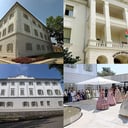
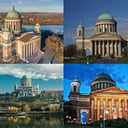
The Hungarian National Gallery is the country’s largest public collection documenting and showcasing the rise and evolution of Hungarian fine art. Beyond permanent and temporary exhibitions, it fills the calendar with Hungarian- and foreign-language guided tours, themed programs, family days, festivals, and concerts. Kids can join creative clubs, art education workshops, and summer camps—all inside the former royal palace on Buda Castle Hill.
Budapest–Berlin–Paris: Tihanyi’s Road to Abstraction
On February 6, writer and art historian Rita Halász leads an offbeat tour tracing Lajos Tihanyi’s journey from café culture at the turn of the century to the Berlin avant-garde and Parisian modernism. Born 140 years ago, Tihanyi was a key figure of the Nyolcak (The Eight), and his painting stands as a daring early 20th-century Hungarian avant-garde experiment. The tour follows how he moved from figurative compositions to an autonomous language of pure color and form.
Create! Naked Reality
February 7 dives into one of art’s oldest topics: the human body. The program explores works from the 19th century to today that center on depictions of the nude and the body’s ideals through time. After a gallery walk, participants use their own body parts as both subject and tool to make art—creating body prints on the spot.
Adolf Fényes’s Quiet Mastery
Also on February 7, a guided tour unpacks A csend képei. Fényes Adolf (1867–1945) emlékkiállítás (The Images of Silence. Adolf Fényes Memorial Exhibition) alongside related highlights in the permanent collection. A sweeping look returns on February 10 with an online guided tour, then again on February 15 and February 21, when curator Ágnes Horváth takes the lead to frame the painter’s legacy in context.
Rebellious Forms, Bold Colors
February 7, 8, 11, and 12 spotlight the major retrospective Rebellious Forms, Bold Colors – The Art of Lajos Tihanyi, marking the artist’s 140th birthday. The exhibition showcases his most important paintings, graphics, and personal objects. Tihanyi, who lost his hearing in childhood, forged a voice in painting by conjuring color and form from silence. Without academic training, he developed an exceptional visual language that made him one of the most original members of the Nyolcak and of 20th-century Hungarian art. Guided tours encourage deeper dives into his methods and breakthroughs.
From Crypt to Cupola
On February 8, the building tour peeks into the hidden wonders of the former royal palace. Visitors step into the Habsburg Palatine Crypt, ascend to the cupola for that sweeping city panorama, and wander through other architectural marvels while getting a primer on the Gallery’s history and collections.
French, Italian, and English on the Floor
February 8 brings Budapest–Berlin–Paris. L’art de Lajos Tihanyi, a French-language tour focused on Tihanyi’s painting. On February 13, Rebellious Forms, Bold Colors runs in English, offering global visitors a direct route into Tihanyi’s story. That same day, the Italian-language Visita guidata in italiano surveys Hungarian art’s marquee masterpieces from the Middle Ages to today, with a special focus on the 19th and 20th centuries—maybe even crossing paths with Dante among the canvases.
Toddlers, Masks, and Carnival
February 10’s Tipegők – Velencei Karnevál invites the littlest visitors to Venice’s most elegant masked balls and parades—via imagination. Expect carefree fun: a spin on a carousel, dancing, role-playing, and crafting that essential carnival accessory—a decorative mask.
Color It Anew: Kids’ Museum Workshops
On February 11, 18, and 25, Színezd újra! gets kids wondering: How did people live long ago? What do paintings tell us about the past? Through paintings, genre scenes, portraits, and old photographs, children glimpse everyday life—what people used, wore, played with, and dreamed of. Inspired by the artworks, they draw, paint, make comics, and invent their own stories.
Nudes and Ideals
Mama, nézd! – A test szépsége on February 12 and 26 admires the refreshed Aktszobrok a századfordulóról (Nude Sculptures from the Turn of the Century) exhibition. The tours look at how depictions of the nude mirror the ideals of their era. The English-language Look at That, Mom! – The Beauty of the Human Body on February 19 guides visitors through the same renewed show.
Love Stories in the Galleries
Valentine’s Day is stacked. A legszebb magyar szerelmes festmények (The Most Beautiful Hungarian Love Paintings) follows artists and muses through bliss, passion, storms, and tragedy via Pál Szinyei Merse, János Vaszary, Róbert Berény, and more. Then a musical guided tour—Budapest, Berlin, Paris, and the pulsing first decades of the 20th century—brings Ádám Bősze and Gábor Bellák into Tihanyi’s world. Love Is in the Air adds an English-language tour of the greatest and most tragic love stories in the painting and sculpture collections.
Scholar Talks and Deep Dives
February 14 features art historian Gergely Barki’s encore lecture, Kettő vagy egy sem. Duplázások és hiátusok Tihanyi Lajos életművében (Two or None: Doublings and Gaps in Lajos Tihanyi’s Oeuvre), probing doubles and gaps in the artist’s work. On February 28, The Taste of Sunshine brings curator Edit Plesznivy into Adolf Fényes’s chamber exhibition, sketching the painter’s full career through emblematic masterpieces while touching on his family background and formative years.
Kids, Carnival, and Sculpture Come Alive
February 21’s Kaland a Galériában – Farsangi átváltozás offers guided tours tailored by age: 10:30–11:15 for 6–9-year-olds, 11:30–12:15 for 10–13-year-olds. On February 22, Aktszobrok a századfordulóról returns with a guided look at nude representation from the 19th to the 20th century. February 24’s Ovisok a Galériában – Milyen színes! lets preschoolers play their way through the museum before creating in the workshop. Rounding out the month, February 25’s Szellemi fitnesz – Életre kelt szobor asks if a sculpture can come to life—or be loved—with a gallery walk through the permanent collection and the refreshed nude sculpture show, followed by hands-on making in the studio.