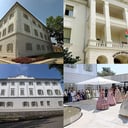
Szekszárd’s Free University returns in 2026 with a sharp, eclectic mix of public lectures and art history sessions that dive into Europe’s 20th-century turmoil, outsider art, and volcanic horizons. The program unfolds across two venues in the city center: the Mihály Babits Cultural Center (Babits Mihály Kulturális Központ) and the House of Arts (Művészetek Háza), both at 7100 Szekszárd, Szent István tér 28. It’s a compact, walkable campus feel with a heavyweight syllabus—and plenty of wine-country charm just outside.
When and where to tune in
Four headline evenings anchor the season. On February 24, Kultúrkortyok Free University opens with Soviet Terror in Hungary, 1944–1945, a raw look at the last months of World War II and the first months after, when occupation reshaped daily life and memory. The next night, February 25, things pivot to the avant-garde with “Fürtös, láncos, táncos, nyalka…” – The European School, spotlighting the postwar Hungarian artist group that pulled local modernism into international conversation with fearless experimentation.
March 11 pushes deeper into the margins with “Down: The Roaring of Nightmares…” – Naives, Amateurs, Altered States, tracing the unruly edges of creativity—self-taught visions, outsider impulses, and art that channels trance, dream, or delirium. Then on April 21, the series tilts the compass far south with Kultúrkortyok Free University – Ethiopia, or Lighting a Candle at the Erta Ale Volcano, a field report that swaps galleries for lava lakes and turns a global lens on culture, geology, and the human ritual of awe. Each event is set in Szekszárd, and the locations are a few steps apart around Szent István Square, making double features and late-night debriefs an easy habit.
Stay in style: wine hotels and easy access
Szekszárd’s hospitality scene leans into its terroir. Hotel Merops**** sits in the downtown core next to the Mészáros Winery (Mészáros Pincészet), just minutes on foot from the square. It’s a purpose-built wine hotel: serene small-town setting, vineyard ambiance folded into modern interiors, a trained team, and a broad menu of personalized services for both deep-rest seekers and brisk weekend explorers. It’s the kind of place where a lecture program feels like a festival when you walk back past cellar doors and café terraces.
Also at the city’s northern gateway, right off Route 6 between the Szekszárd and Tolna wine districts, Sió Motel spreads across 2.5 ha, with the Gemenc forest close by and Sárköz in the neighborhood. It’s a practical base for anyone plotting morning nature walks and evening culture. For a polished mid-tier option, Hotel Zodiaco*** bills itself as the area’s only three-star property, designed in a modern, elegant style and refreshed with incremental upgrades year after year so both business stays and weekend breaks feel smooth and current.
Eat, sip, repeat: cellars, bistros, and vineyard views
Szekszárd is built on layers of wine. The city’s compact grid hides punchy little food-and-wine combinations that make post-lecture nights run late—in a good way. Nádasdi House (Nádasdi Ház) hosts the Main Street Bistro, known for a wide menu and a local-favorite streak. It doubles as a gateway to curated tastings and cellar events set to the rhythm of Szekszárd’s reds. Whether it’s a birthday dinner, an informal team night, or a proper celebration, the vibe is rustic-elegant and unfussy—the sort of place that makes a Thursday feel like Saturday.
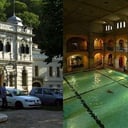
For a deep dive into wine culture, the 100-hectare Bodri Winery (Bodri Pincészet) on the city’s southern edge is a full-scale destination: a winery, event center, restaurant with an open kitchen, guesthouses, and a Roman bath below ground that wraps thermal water, domed chambers, a jacuzzi, and a sauna into one mellow ritual. The big cellar sprawls over 1,800 square meters under twelve cupolas; a 300-square-meter aging cave is open on tours; and a 1,400-square-meter rosé facility underscores the operation’s modern side. With room for 61 guests across its carefully designed accommodations, Bodri turns a tasting into a mini-retreat. In the Optimus Restaurant, chef-driven plates spotlight Hungarian cuisine—recognizably Magyar but modernized, and paired in lockstep with estate wines.
Art, wood, and wine underground
In the heart of Szekszárd’s Upper Town (“felső városrész”), the Borfaragó Cellar (Borfaragó Pince) occupies a former carpenter’s and woodcarver’s workshop, now reborn as a tasting cellar that threads together artisan wines and folk woodcarving gems. It’s discreetly placed—off the main drag, easy to reach, yet out of the spotlight—ideal for gathering friends or colleagues without feeling like you’re in the shop window. Think hand-hewn beams, bench talks that stretch, and bottles that tell local stories sip by sip.
From vineyard blocks to lecture halls
The region’s patchwork of estates fills in the background hum to the Free University’s foreground buzz. Attila Estate (Attila Birtok), set in the Baranya Valley within Szekszárd, tends 14 hectares and works a tight set of varieties: Kékfrankos, Kadarka, Cabernet Franc, Cabernet Sauvignon, and Zweigelt—grapes that define the area’s vivid reds and lithe blends. Up on Várdomb Hill, other cellars cluster in classic stripes of vineyard and clay, reminding you that the city’s cultural calendar is inseparable from its slopes. In Szekszárd, you learn by listening—and by tasting.
Plan the perfect culture break
All four lectures land within easy strolling distance in central Szekszárd and pair neatly with a glass or a walk under the plane trees. Book a room, block out the dates—February 24 and 25, March 11, April 21—and let the evenings run long. Soviet histories, modernist jolts, outsider visions, and a live-wire volcano: it’s a lineup that burns bright, then glows slow like embers.