Budapest is rolling out a packed 2026 calendar of themed walking tours across Buda and Pest, opening doors to landmark buildings, secret courtyards, legends, and culinary stories. Whether it’s a weekend dive into Art Nouveau grandeur, a backstage peek at a reborn palace hotel, or a night visit to a church after closing, the program serves every curiosity: architecture lovers, history fans, foodies, and anyone keen to wander with a guide who knows the city’s best-kept tales. Bring family, friends, or the whole team—most tours run multiple times and are easy to slot into a day in the city.
Architecture Up Close: From Stock Exchange to TV HQ
One headline route brings visitors inside the monumental building at Szabadság Square 17, known as the Stock Exchange Palace (Tőzsdepalota), later repurposed as Hungary’s television headquarters. Tours run throughout March with time slots on March 8, 14, 15, 21, 22, 28, and 29, frequently at 10:00, 11:00, 13:00, 14:00, 15:00, and 16:00. Expect a deep dive into political, financial, and media history framed by one of the city’s most imposing façades. It’s the kind of insider access that lets you read Budapest’s transformations in stone and steel.
Párisi Udvar: Dream in Luxury
“A Párisi Udvar álom luxuskivitelben” invites you into the glittering arcade and hotel where Neo-Gothic arches, Moorish flourishes, and Art Nouveau glasswork collide. You’ll catch the lavish details from the ground floor up, including restored mosaics and a light-drenched passage that once defined downtown shopping elegance. Slots appear regularly—March 8, 14, 15, 19, 21, 22, 28, and 29—often at 11:00, 15:00, and 16:30. It’s a visual feast and a crash course in how Budapest marries commerce, craftsmanship, and spectacle.
Rebirth of an Icon: Ballet to W Budapest
“B, mint balett, W, mint W Budapest” charts the renaissance of an iconic building reborn as a luxury hotel with a nod to its artistic past. Tours on March 8, 15, 21, 22, 28, and 29—commonly at 10:00 and 12:30—walk through design decisions that bridge heritage and high-end hospitality. It’s a front-row seat to adaptive reuse: how a historic shell becomes a contemporary stage while keeping its soul.
Adria Palace: Atlantis Above Ground
Under the teasing title “Adria-palota: Atlantisz a föld felett,” these visits reveal a palatial survivor of Budapest’s urban tides, offering a glimpse of once-sunken grandeur resurfacing in restored spaces. Catch it on March 14, 21, and 22 at 14:00 and 10:00. The narrative arcs through maritime motifs, commercial power, and the patience of preservation.
Gellért, Nyugati, and Matthias: Legends and After-Hours
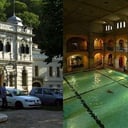
The city’s big names get intimate treatment. “A legendás Gellért” unpacks stories from the famed hotel and baths on March 10 and 24 at 18:00—an evening stroll through thermal lore and hospitality mythmaking. The Nyugati Railway Station tour, with special access to the Royal Waiting Room, runs March 22 at 09:30, 10:30, 11:30, 12:30, 13:30, 14:30, 16:30, and 17:30, turning a transit hub into a gallery of iron, glass, and royal ritual. For pure magic, “Mátyás-templom exkluzív épületbejárás zárás után” takes you into Matthias Church after closing on March 17, 19, and 26 at 19:00—stained glass and silence included.
Secret Gardens, Urban Codes, and Culinary Trails
“Titkos kertek és terek a belvárosban” reveals tucked-away courtyards and hidden squares on March 21 and 28 at 10:30 and 15:00. “Városi kódfejtés: palotasztorik az Andrássy útról” deciphers the tales of grand palaces on March 21 and 22 at 14:00 and 10:00, threading architecture and gossip along the city’s showpiece boulevard. Food lovers can pick “Sercli” for a mill-to-bakery journey on March 21 at 10:00; “Édes élet” on March 21 at 10:30 for a sweet-toothed chase; and “Randevú a hangszerek királynőjével,” a downtown organ tour with a mini-concert, on March 28 at 10:00—music as architecture in motion.
Crime, Fortune, and Racing Secrets
“Azt beszélik a városban…” delivers crime stories and city gossip on March 28 at 10:00, turning pavements into plotlines. “Séta Fortunával” in Víziváros on March 28 at 11:00 mixes lucky places with tasting stops—a stroll where talismans meet treats. And on March 29 at 11:00, “Tétre, helyre, befutóra!” opens up Kincsem Park behind the scenes, decoding racing culture from paddock whispers to grandstand rituals.
Forgotten Neighborhoods and Closed Doors
Some of the most compelling walks head where everyday access is limited. “Egy törökfürdő meséje” explores the shuttered Király Baths on March 16 at 17:30, a rare look at Ottoman heritage in suspended animation. “Zsinagógából vívóterem” on March 21 at 10:00 traces an Angyalföld story from synagogue to fencing hall, mapping memory into brick and sport. And “Volt egyszer egy Sárga Ház” on March 16 at 18:00 revisits the era of the National Institute of Psychiatry and Neurology—a humane tour through science, stigma, and the city’s medical past.
Women, Divas, and the Turn of the Century
“Intim titkok a századfordulón” on March 17 at 18:00 sits with the everyday lives of women in old Budapest—fashion, labor, etiquette, and quiet rebellions. “Díva és csalogány” on March 18 at 18:00 asks, with a wink and a challenge: what is a woman worth if…? It’s salon culture, stage lights, and the voices that filled them.
Time-Travel Evenings and a Culinary Dynasty
“Volt egyszer egy Millennium,” evenings with historian Csaba Katona, lands March 13, 19, and 23 at 18:00—spirited detours through Hungary’s fin-de-siècle boom. “A nagy Gundel-sztori” on March 20 at 18:00 unpacks the city’s most famous hospitality family, revealing recipes for welcome that go beyond the kitchen.
Taste of Italy, Stories of Home
“Kóstoló Olaszországból” pairs flavors from Pomo D’Oro with stories from the past on March 10 and 24 at 17:30. It’s culinary time travel with a Mediterranean passport, served in downtown Budapest.
However you map your March, Budapest’s guided walks make the city legible, lovable, and endlessly walkable—one courtyard, cupola, station hall, and whispered legend at a time.