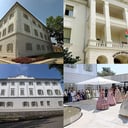
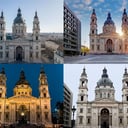
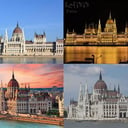
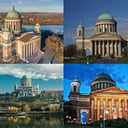
The Hungarian National Gallery is the country’s largest public collection tracing how Hungarian visual art took shape and evolved. Inside the former Royal Palace, visitors find permanent and temporary exhibitions, guided tours in Hungarian and foreign languages, themed programs, family days, festivals, and concerts. Kids get a full creative lineup too: workshops, art education sessions, and summer camps that turn the gallery into a playground for curious minds.
Tihanyi 140: A Life in Color and Silence
From December 27 through multiple dates in January, the gallery marks the 140th anniversary of Lajos Tihanyi’s birth with a major retrospective: Rebel Forms, Bold Colors – The Art of Lajos Tihanyi. Expect his most important paintings and graphics, plus personal artifacts, gathered to illuminate a life that forged a singular visual voice out of silence. Tihanyi lost his hearing as a child; in the quiet, he fashioned colors and forms that spoke volumes. Without academic training, he built an extraordinary visual language that made him a defining member of the Nyolcak (The Eight) artist group and one of the most original figures in 20th-century Hungarian painting. The Budapest show runs on 2025.12.27, 12.28, 12.29, and 12.30, and returns on 2026.01.09, 01.11, and 01.17, with guided tours on select dates to dive deeper into his method and legacy.
From Crypt to Dome: A Palace Walk
On 2026.01.03, the building itself takes center stage with Building Walk – From the Crypt to the Dome. The former Royal Palace hides marvels from cellar to skyline. The tour traces the history of the Hungarian National Gallery and its collections, pauses inside the Habsburg Palatine Crypt, climbs to the dome for jaw-dropping panoramas, and steps into other distinctive corners of the complex. It’s architecture, heritage, and art rolled into one Budapest stroll.
Kids Become Detectives
January brings the Color It Anew! museum workshop for kids on 2026.01.07, 01.14, and 01.21. The gallery’s spaces are draped in mysterious stories, so young sleuths are recruited to follow a great painter’s trail: they’ll uncover the secrets of Lajos Tihanyi. The mission involves studying dozens of works, hunting for hidden details across canvases, and piecing together a puzzle that finally reveals the bigger picture. Alongside investigating, there’s hands-on creation: children “fake” paintings as part of the detective work, build composite “phantom images,” and experiment with photo modification. It’s playful, process-driven, and deeply visual—just like Tihanyi’s art.
Sunny Days and Silent Voices
On 2026.01.08, Look at that, Mom! – Sunny Days guides families through Pictures of Tranquillity, weaving in Adolf Fényes’s (1867–1945) pieces alongside the permanent collection. Later, on 2026.01.15, Mama, Look! – Silence Speaks focuses on Tihanyi’s life and art shaped by deafness after childhood illness. The session explores how a seeming disadvantage turned into a creative edge, making his work strikingly unique within the Hungarian avant-garde.
Curators and Historians Open the Doors
The Tihanyi 140 program leans into provenance and rediscovery. On 2026.01.15, curator Mariann Gergely leads a tour, recalling how, until the 1970s, Tihanyi’s works were known in Hungary almost exclusively through black-and-white reproductions. His estate, in a story ripe with twists, arrived from Paris to the Hungarian National Gallery’s collection 55 years ago. On 2026.01.16, art historian Gergely Barki presents The Person Behind the Palette, a maverick walk-through of Tihanyi 140 that foregrounds the artist’s hand, eye, and experiments.
Guided Tours in Multiple Languages
On 2026.01.09, visitors can join a guided tour to learn more about Tihanyi’s painting, while Italian speakers get a visita guidata in italiano the same day. The route highlights the most famous pinnacles of Hungarian art from the Middle Ages to today, with special emphasis on the 19th and 20th centuries—and yes, you might even bump into Dante among the canvases.
Adolf Fényes and the Light of Everyday Life
On 2026.01.10, Adolf Fényes’s art takes the spotlight. His paintings open doors onto worlds where sunlight warms even the humblest interiors, market scenes spark with fairy-tale liveliness, and everyday life stands as tall as any historical tableau. As visitors wander through his landscapes and intimate rooms from the turn of the 19th–20th century, the tour teases out how a peasant courtyard could live in the shadow of French Impressionism, what a Szolnok veranda has to do with Paris, and what these century-old genre scenes whisper about the simple joys and sorrows of the past.
Nudes at the Turn of the Century
On 2026.01.18, the exhibition Nudes from the Turn of the Century gets a fresh guided tour. The nude—one of art’s oldest subjects—never disappears, but the way it’s shown always shifts with the era’s ideals. This updated 19th–20th-century display opens those changes up for a closer look, sculpture by sculpture, body by body.
Abstract Energy, Hands-On
On 2026.01.17, Create! – Abstract Experience Painting channels pure abstraction. After a gallery walk introducing heavy hitters such as Sean Scully, Judit Reigl, and Simon Hantai—artists whose life’s work anchors abstract art—participants paint bold abstracts of their own. Geometry, color play, free brushwork: it’s a workshop that asks you to see with feeling first.
For the Smallest Visitors
On 2026.01.13, Toddlers – Snowflake Dance bundles up for a magical winter adventure inside the gallery. Children explore how forests dress in white and which colors still hide in snowy landscapes. Then everyone sings, tells stories, and dances with snowflakes.
Fitness for the Mind
On 2026.01.21, Mental Fitness – New Year, New Style looks at the chameleons of Hungarian art. Some creators—János Vaszary, József Rippl-Rónai, Aurél Bernáth—worked across multiple styles, to the point that you might not believe a pair of paintings came from the same artist, only from different periods. The gallery walk lays these shifts side by side and asks: what changes, what stays, and why do artists reinvent at all?
All events and exhibitions take place in Budapest at the Hungarian National Gallery, where the building, the collections, and the city’s skyline join forces to make art feel vivid, present, and personal.