The Hungarian National Gallery is rolling out a rich lineup of exhibitions, tours, talks, family programs, and concerts that trace the birth and evolution of Hungarian fine art—anchored by a major survey of Lajos Tihanyi on the 140th anniversary of his birth. Expect permanent and temporary shows, guided tours in multiple languages, themed events, festivals, and creative workshops for kids, plus summer camps and art education sessions, all in Budapest.
Rebel Forms, Daring Colors—Lajos Tihanyi’s Art
Launching January 23, the special retrospective gathers Tihanyi’s key paintings, graphics, and personal items. Deaf since childhood, Tihanyi conjured color and form from silence and forged a singular voice in paint. Working outside the academy, he built a distinctive visual language that made him a defining member of The Eight (Nyolcak) and one of the most original figures in 20th-century Hungarian art. Guided tours invite visitors deeper into his practice. Multiple tour dates run through early February in Budapest, including accessible sessions with sign language interpretation.
Double Exposures and Gaps
On January 24, art historian Gergely Barki unpacks Kettő vagy egy sem. Duplázások és hiátusok Tihanyi Lajos életművében (Two or None: Doublings and Hiatuses in Lajos Tihanyi’s Oeuvre), exploring duplicates, absences, and the riddles in Tihanyi’s body of work.
Adventures in the Gallery—Strange Faces
Also on January 24, two tailored kids’ tours dive into portraits and expression: 10:30–11:15 for ages 6–9 and 11:30–12:15 for ages 10–13, in Budapest.
Accessible Tours in Sign Language
January 25 features a sign-language-interpreted tour of the Tihanyi retrospective, reaffirming the link between the artist’s silent world and the vivid forms he created without academic training, and his rise within The Eight and Hungarian modernism.
Toddlers’ Hour—Snowflake Dance
On January 27, little ones bundle up for a winter journey through the museum: singing, stories, and a playful look at the white forest and the colors hidden in a snowy landscape. Budapest.
Recolor It! Kids’ Workshop
January 28 kicks off a detective-style creative club for children. The gallery’s spaces hum with mystery as kids track Tihanyi’s secrets through dozens of works, search for hidden details, and piece together the puzzle. Alongside sleuthing, they “forge” paintings, create identikits, and experiment with photo manipulation. Budapest.
Mama, Look!—Silence Speaks
On January 29, a family program probes how Tihanyi’s childhood deafness—initially a challenge—became an advantage that sharpened his vision and made his art uniquely his own. Budapest.
Guided Deep Dives and Curator-Led Tours
January 30 brings “Phenomenon: That Was Lajos Tihanyi,” an in-gallery tour by art historian Blanka Bán. What did his parents envision for him? Why did he paint on both sides of certain canvases? What was he like, and how did he portray his peers? Follow his journey from Fauvist color to nonfigurative painting. Additional guided sessions for the Tihanyi show run January 29 and 31, and February 7–8 in Budapest.
Concrete Embroidery—A Writer’s View
On January 31, author and art historian Rita Halász offers a subjective guided tour titled Betonba hímezve (Embroidered in Concrete), bringing a literary lens to Tihanyi’s work. Budapest.
The Eight—Lightning Strike of the Avant-Garde
February 1 presents a guided survey of The Eight (Nyolcak), the group initially called the Seekers (Keresők), active from 1909 to 1912. With only three joint exhibitions, their arrival jolted Hungarian cultural life like a scientific and technological revolution. Budapest.
Sunday Choral Concert
Also on February 1, the Albert Schweitzer Chamber Choir and Orchestra perform under the first-floor dome, adding a musical echo to the visual program. Budapest.
Online Access From Home
Virtual guided tours make the shows accessible beyond the museum walls: February 3 for Tihanyi and February 10 for Adolf Fényes (Fényes Adolf). Stream from Budapest to anywhere.
Time Travel for Kids
On February 4, the Recolor It! workshop returns. How did people live long ago? What do images tell us about the past? Children explore daily life via paintings, genre scenes, portraits, and old photos, then draw, paint, craft comics, and invent their own stories. Budapest.
Tihanyi, the Restless Charmer
February 5 pairs art manager Nóra Winkler with art historian Tünde Topor for a joint tour: Tihanyi Lajos, a nyughatatlan sármőr (Lajos Tihanyi, the Restless Charmer), a lively look at his persona and art. Also on February 5, Mama, Look!—The Beauty of the Body revisits timeless depictions of the human figure through the refreshed Nude Sculptures from the Turn of the Century (Aktszobrok a századfordulóról) exhibition. Budapest.
Budapest–Berlin–Paris: Toward Abstraction
On February 6, Rita Halász guides a tour tracing Tihanyi’s path from the café culture of the fin de siècle to the Berlin avant-garde and Parisian modernism, revealing how he moved from figuration to a pure language of color and form. Budapest.
Adolf Fényes and The Naked Reality
February 7 features The Images of Silence: Adolf Fényes (1867–1945), a memorial show with related works from the permanent collection. The same day, the Create! (Alkoss!) workshop, Naked Reality (Meztelen valóság), looks at the human body from the 19th century to today, then turns visitors’ own bodies into tools with striking body-print artworks. Budapest.
From Crypt to Cupola
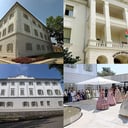
February 8 offers the architectural tour Building Walk—From Crypt to Cupola (Épületséta – Kriptától a kupoláig): discover the former royal palace, the Habsburg palatine crypt, the panoramic dome, and other hidden spaces. That day also brings a French-language tour, Budapest–Berlin–Paris. The Art of Lajos Tihanyi. Budapest.
Venetian Carnival for Toddlers
On February 10, Toddlers—Venetian Carnival (Tipegők – Velencei Karnevál) caps the family-friendly strand with the most elegant masks and festive flair, adapted for the museum’s youngest visitors. Budapest.