A sweeping season of art, stories, and hands-on adventures is taking over the Hungarian National Gallery in Budapest. The country’s largest public collection tracing the birth and evolution of Hungarian fine art is rolling out a packed lineup of blockbuster exhibitions, guided tours in multiple languages, family days, workshops, and concerts. Kids get their own space too, with creative clubs, art education sessions, and summer camps that turn the galleries into playgrounds of discovery.
Lajos Tihanyi at 140: A Life’s Work Unfolds
The headline event is a major retrospective: Rebel Forms, Bold Colors – The Art of Lajos Tihanyi, marking the 140th anniversary of the artist’s birth. Visitors can explore his most important paintings, graphics, and personal items, a rare chance to take in the full arc of a radical life in art. Tihanyi lost his hearing in childhood, shaping a world of color and form out of silence, and forging a voice that carried across canvases instead of sound. With no formal academic training, he developed a striking visual language that made him a key figure in The Eight (Nyolcak) and one of the most original Hungarian painters of the 20th century. The exhibition runs on multiple dates: December 27–30, 2025, and returns January 9, 11, and 17, 2026, in Budapest.
See More, Learn More: Guided Tours and Deep Dives
Several dates bring guided tours right into the heart of Tihanyi’s work. On January 9 and January 11, visitors are invited to view the show with expert commentary and dig deeper into his painting practices and unconventional path. Curator-led special events add layers: on January 15, TIHANYI 140 is unpacked by curator Mariann Gergely, who traces how Tihanyi’s art was known largely via black-and-white reproductions until the 1970s. She also maps the dramatic journey that brought the artist’s estate from Paris into the Gallery’s collection 55 years ago. On January 16, art historian Gergely Barki leads an offbeat tour titled The Person Behind the Palette, and on January 17, writer and art historian Rita Halász delivers a subjective guided walk, Concrete Embroidery, connecting text, texture, and the artist’s boldness.
From Crypt to Dome: Architecture Walk
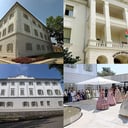
On January 3, the Gallery opens up the former royal palace like a storybook. The architecture tour, From Crypt to Dome, reveals the Habsburg palatine crypt, the panoramic dome with its sweeping city views, and other rarely seen corners that anchor the institution’s layered history and its vast, evolving collection. It’s a look at the building as an artwork in itself, with stone, staircases, and skyline standing in for brush, canvas, and frame.
Kids Take the Lead: Detective Art Labs
The January edition of Recolor It! – a museum workshop series for children – turns the galleries into a mystery hunt on January 7, 14, and 21. With magnifying eyes and curiosity, young sleuths track Tihanyi’s secrets through dozens of his works, scanning paintings for hidden clues that knit together into a final big reveal. Alongside the investigation, the hands-on making gets playful and bold: kids forge “forgeries,” craft composite portraits, and experiment with photo manipulation, learning that every brushstroke can hold a surprise.
Art for the Very Young
On January 13, Toddlers – Snowflake Dance wraps the smallest visitors in winter magic. Soft gloves and warm boots set the tone for a stroll through white-wrapped forests and the subtle colors of snowy landscapes. Expect songs, stories, and a shared dance with snowflakes, turning the gallery into a cozy winter garden of sound and movement.
Sunny Days and Quiet Moments
January 8 brings Look at that, Mom! – Sunny Days, an English-language guided tour through Pictures of Tranquillity, paired with the glowing works of Adolf Fényes (1867–1945) and selections from the permanent collection. On January 10, The Art of Adolf Fényes invites you into interiors where sunlight spills across modest rooms, markets bustle with fable-like energy, and everyday life is as worthy as any grand historical scene. As you wander through Fényes’s landscapes and intimate spaces at the turn of the 19th–20th century, the tour asks how a peasant courtyard can sit in the shade of French Impressionism, what a veranda in Szolnok might have in common with Paris, and what these century-old genre scenes say about simple joys and quiet sorrows.
Nudes and New Views
On January 18, Nude Sculptures from the Turn of the Century spotlights one of art’s oldest themes: the naked human body. The guided tour explores how the depiction of the nude shifts with each era’s ideals, focusing on the Gallery’s refreshed exhibition of 19th–20th-century nude sculptures and the changing standards that sculptors chiseled into stone and cast in bronze.
Style Shifts and Abstract Sparks
January 21’s Mind Fitness – New Year, New Style looks at artists who reinvented themselves. Painters like János Vaszary, József Rippl-Rónai, and Aurél Bernáth moved across styles so dramatically that paintings from different periods might be hard to pin to the same hand. After a gallery walkthrough, visitors head to the studio to create work inspired by one of Rippl-Rónai’s styles. The abstract vein pulses on January 17 with Create! – Abstract Experience Painting. After exploring pieces by heavyweights like Sean Scully, Judit Reigl, and Simon Hantaï, participants mix geometric rhythms and free-running brushstrokes to make their own bold abstractions.
Multiple Languages, Many Doors
The Gallery welcomes international audiences, too. January 9 features an Italian-language guided tour, Visita guidata in italiano, spanning the greatest Hungarian masterpieces from the Middle Ages to today, with a special focus on the 19th and 20th centuries. There’s even a playful nod to Dante amid the canvases. On January 15, Look, Mom! – The Silence Speaks turns Tihanyi’s childhood illness and resulting deafness into a lens for understanding how a perceived limitation became the spark of an extraordinary artistic voice. And throughout, Budapest’s Hungarian National Gallery keeps its doors open to fresh eyes, whether they arrive for architecture, avant-garde, or a child’s first gasp at a sunlit room.