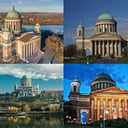
The Hungarian National Gallery, Hungary’s largest public collection devoted to the birth and evolution of national fine art, has packed the coming weeks with exhibitions, tours, concerts, workshops, and family programs in multiple languages. Alongside permanent and temporary shows, visitors can dive into themed events, festivals, and creative sessions for kids—from after-school clubs to summer camps—plus guided tours in Hungarian and other languages.
Kids turn sleuths in Color It Again!
January’s Color It Again! workshops challenge young detectives to crack the case of painter Lajos Tihanyi. The Gallery’s spaces hum with mysteries as kids track clues across dozens of his works, spotting hidden details to reveal a larger puzzle. Art-making is built into the investigation: they “forge” paintings, build a composite sketch, and experiment with photo manipulation to piece the story together.
Mama, look! When silence speaks
One of the Hungarian avant-garde’s most original voices, Lajos Tihanyi lost his hearing and speech in childhood. A family-friendly session explores how this challenge became a creative edge, shaping a visual language that made his art unmistakable.
Rebellious forms, bold colors
The Gallery marks the 140th anniversary of Tihanyi’s birth with a sweeping retrospective of his key paintings, graphic works, and personal objects. Having lost his hearing as a child, Tihanyi conjured colors and forms out of silence and found his own voice in painting. Without academic training, he forged a singular visual idiom that made him a pillar of the Nyolcak (The Eight) group and one of the most distinctive figures in 20th-century Hungarian art. Visitors can join guided tours to explore his methods, themes, and evolution.
“Phenomenon: that was Lajos Tihanyi”
Art historian Blanka Bán leads a tour focused on curiosities: What career did Tihanyi’s parents imagine for him? Why did he paint both sides of certain canvases? What did contemporaries say about his personality, and how did he capture them in portraits? The journey tracks his leap from the Fauves’ vivid palette to nonfigurative painting, connecting biographical notes to his stylistic pivots.
Writer-led insights and a choral swell
On January 31, novelist and art historian Rita Halász offers a subjective tour titled Embroidered in Concrete, adding a literary lens to Tihanyi’s oeuvre. On February 1, the Gallery’s first-floor dome hall fills with sound as the Albert Schweitzer Chamber Choir and Orchestra performs, adding a musical heartbeat to the visual program.
The Eight, in three electric years
A spotlight tour revisits the Nyolcak (The Eight), initially known as the Keresők (Seekers). Active for just three years—from 1909 to 1912, with three group exhibitions—their impact jolted Hungarian cultural life like a scientific and technological revolution. This program reframes Tihanyi within the group’s seismic push toward modernity.
Go remote: online tours
From your sofa, step into the Tihanyi retrospective via online guided tours, or do the same with the show The Images of Silence. Adolf Fényes (A csend képei. Fényes Adolf). Digital access widens the doorway to two defining chapters of early 20th-century Hungarian painting.
Time travel for kids
February’s Color It Again! sessions ask: How did people live long ago? With paintings, scenes of daily life, portraits, and old photographs, children peek into the past—what people wore, the objects they used, what they played, and what they dreamed about. Inspired by what they see, they draw, paint, craft comics, and invent stories of their own.
The restless charmer
Curator Nóra Winkler and art historian Tünde Topor guide a tour dubbed Lajos Tihanyi, the Restless Charmer, tilting the spotlight from brushwork to persona—how style and charisma powered his trajectory from Budapest to Berlin and Paris.
Nudes through the ages
Mama, look! The Beauty of the Body explores the nude as a throughline of art history, mirroring each era’s ideal. A guided visit to the refreshed Nude Sculptures from the Turn of the Century (Aktszobrok a századfordulóról) traces bodies as ideals, symbols, and subjects. The studio’s sister program, Create! Naked Reality, stretches that thread from the 19th century to today, culminating in body-print artworks made by participants.
Budapest–Berlin–Paris
Rita Halász returns for a deep dive: Budapest–Berlin–Paris. Tihanyi’s road to abstraction traces how café culture, Berlin’s avant-garde, and Parisian modernism reshaped his hand—from figurative compositions to the autonomous language of pure color and form.
Adolf Fényes’s quiet pictures
A guided tour walks through The Images of Silence. Adolf Fényes (1867–1945) memorial exhibition, and related pieces in the permanent collection, foregrounding the artist’s meditative realism and subtle light.
French, Italian, and English on deck
There’s a French-language tour, Budapest–Berlin–Paris. L’art de Lajos Tihanyi, plus Rebellious Forms, Bold Colors in English. Italian-speaking visitors can discover the key milestones of Hungarian art from the Middle Ages to today, with special focus on the 19th and 20th centuries—and maybe spot Dante in the galleries.
From crypt to cupola
An architectural walk unlocks the former Royal Palace: the Habsburg Palatine Crypt, the panoramic dome, and other corners that tell the building’s layered story alongside the Gallery’s collection.
Love is in the air
On February 14, romance drifts across the halls in a themed tour of muses, lovers, and artists’ wives—a reel of great and tragic love stories pulled from the painting and sculpture collections. The day also features an encore lecture by art historian Gergely Barki: Two or None. Doublings, a dive into duplications and doubles across art.