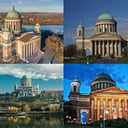
The Hungarian National Gallery is the country’s largest public collection documenting and showcasing the evolution of Hungarian fine art. Inside Buda Castle, the museum runs permanent and temporary exhibitions, guided tours in multiple languages, thematic programs, family days, festivals, and concerts. Kids can dive into creative workshops, art education classes, and summer camps that blend play with discovery.
Spotlight on Lajos Tihanyi
A major new retrospective marks the 140th anniversary of Lajos Tihanyi’s birth, bringing together his key paintings, graphic works, and personal objects. Tihanyi lost his hearing in childhood, and from silence he forged powerful color and form, crafting a distinct voice in painting without academic training. He became one of the most original figures of The Eight (Nyolcak) and early 20th-century Hungarian art, evolving from fauvist color toward non-figurative abstraction. Several curator- and writer-led tours unpack how he painted both sides of some canvases, how his parents imagined his future, how contemporaries described his personality, and how he captured them in portraits. Visitors can follow his path from the café culture of the fin de siècle to Berlin’s avant-garde and Parisian modernism, and see how he moved from figuration to a self-sufficient language of pure colors and forms.
Guided Tours and Talks
Art historian Blanka Bán leads the “Phenomenon: This Was Lajos Tihanyi” tour, answering the big questions about his life, double-sided works, and personal myth. Writer and art historian Rita Halász offers multiple perspectives: a subjective tour titled “Embroidered in Concrete,” and “Budapest–Berlin–Paris: Tihanyi’s Road to Abstraction,” tracing the forces that shaped his style. An English-language tour—Rebellious Forms, Bold Colors—welcomes international visitors, while a French-language session invites guests to “Participez à une visite guidée,” exploring Tihanyi’s art. Italian speakers can discover Hungarian masterpieces on “Visita guidata in italiano,” spanning medieval to modern, with a wink to Dante among the canvases.
The Eight (Nyolcak) in Focus
Linked to the Tihanyi exhibition, a guided program revisits The Eight, the group first known as the Seekers (Keresők). Active only from 1909 to 1912 and staging just three shows, they still jolted Hungary’s cultural and artistic life like a technological revolution. The tour dives into how their brief, electric presence reshaped modern Hungarian painting and how Tihanyi’s personal trajectory intersected with the group’s radical spirit.
Concerts Under the Dome
On a Sunday program, music floods the museum’s first-floor dome hall as the Albert Schweitzer Chamber Choir and Orchestra perform. It’s part of a steady rhythm of concerts threading through the gallery’s calendar—art meets acoustics in one of Budapest’s grandest interiors.
Online Access
Prefer to visit from home? The gallery offers online guided tours of both the Tihanyi and the Adolf Fényes (Fényes Adolf) exhibitions, bringing expert commentary and crisp visuals straight to your screen. It’s an easy way to plunge into Hungarian modernism without leaving the couch.
Adolf Fényes (Fényes Adolf) Remembered
“A képek csendje” (The Silence of Pictures): the commemorative exhibition on Adolf Fényes (1867–1945) opens with guided tours linking the show to the museum’s permanent collection. Curator Ágnes Horváth leads a special walkthrough, connecting Fényes’s intimate quietude with broader currents in turn-of-the-century Hungarian art.
Love, Bodies, and the Nude
The beauty of the human body anchors several programs. “Mama, look! – The Beauty of the Body” explores the nude across eras, reflecting shifting ideals and human archetypes. The renewed exhibition Nude Sculptures from the Turn of the Century (Aktszobrok a századfordulóról) gets a dedicated tour. “Create! – Naked Reality” follows with a studio session: after a gallery walk spanning the 19th century to today, visitors make body prints, turning their own limbs into subjects and tools. Valentine’s Day brings romantic trails in two languages: a Hungarian tour of the most beautiful love paintings—tracing artists and muses through works by Pál Szinyei Merse, János Vaszary, and Róbert Berény—and an English “Love is in the air” walk, spotlighting muses, lovers, and artists’ wives across paintings and sculptures. A musical tour with Ádám Bősze and Gábor Bellák channels Budapest, Berlin, Paris, and the pulse of the early 20th century.
For Families and Kids
“Recolor It!” is a hands-on museum workshop for children. Through paintings, genre scenes, portraits, and old photos, kids peek into everyday lives of the past—what people used, wore, played with, and dreamed about. Inspired by the artworks, they draw, paint, make comics, and create their own stories. “Toddlers – Venetian Carnival” whisks little ones to Italy’s most elegant masquerades: carousel rides, dancing, role-play, and the crafting of a dazzling carnival mask wrap up the festive tour.
Architecture Walks
The former Royal Palace hides marvels: an architectural tour leads visitors from the Habsburg Palatine Crypt to the panoramic dome and other hidden corners. Along the way, the story of the building, the museum, and the collection unfolds with sweeping views over Budapest.
Deep Dives into Tihanyi
Nóra Winkler and Tünde Topor co-lead “Lajos Tihanyi, the Restless Charmer,” taking a candid look at his charisma and swagger. Art historian Gergely Barki investigates “Double-ups and Gaps in Tihanyi’s Oeuvre,” unraveling works that exist in pairs and the conspicuous absences that punctuate his career. Together, these programs frame an artist who invented his own visual grammar from silence—bold, searching, and unmistakably modern.