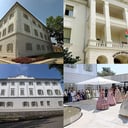
The Hungarian National Gallery, perched on Szent György Square in the Buda Castle district (1014 Budapest, Szent György tér 2.), is the country’s largest public collection charting the birth and evolution of Hungarian visual arts. Expect a lively mix of permanent and temporary exhibitions, multilingual guided tours, themed programs, family days, festivals, and concerts. Kids get a full creative menu, too: workshops, art education sessions, and summer camps—designed to turn curiosity into hands-on art.
Kids in the Studio: Time Travel Through Pictures
February kicks off with Color It Anew!—a museum workshop for children that time-travels through everyday life long ago. Paintings, genre scenes, portraits, and old photos become windows into the past: what people wore, what they played with, which objects they used, and what they dreamed of. Inspired by what they see, kids draw, paint, make comics, and craft their own stories. Sessions run February 18 and 25, and return in March on the 4th, 11th, and 18th, shifting focus to folk life: village festivities, songs, food, clothing, home décor, and the famous tulip-painted chests—then straight to the studio to create motifs of their own.
The Beauty of the Body: Nudes Reborn
The nude—one of art’s most enduring subjects—takes center stage in multiple tours across February and March. On February 19, Look at That, Mom! – The Beauty of the Human Body explores how each era projected its ideals onto the body. On February 22, Aktszobrok a századfordulóról (Nude Sculptures from the Turn of the Century) introduces the refreshed 19th–20th-century sculpture display. The theme returns March 8 with The Allure of Marble, unpacking allegory, symbolism, and the antique spell that makes stone feel startlingly lifelike. On February 25, Intellectual Fitness – Sculpture Brought to Life blends nudes, love, and mythology, moving from the permanent collection to the renewed nude exhibition, before a studio session to wrap it up. The Hungarian-language Mama, nézd! – A test szépsége on February 26 offers another intimate look at the reimagined show.
Carnival, Choirs, and Family Days
February 21 is for young explorers: Adventure in the Gallery – Carnival Transformation features age-tailored guided tours, 10:30–11:15 for ages 6–9, then 11:30–12:15 for ages 10–13. On February 22, a Sunday Choir Concert fills the first-floor Dome Hall with the Albert Schweitzer Chamber Orchestra. Toddlers get their moment on March 10 with Tipegők – In the Realm of the Spring Fairy: songs, rhymes, and playful discovery of spring’s colors in painting, followed by a studio activity. Grandparents and grandchildren team up on March 14 for With Granny in the Gallery – Spring Dressed in Color, a joint tour through the scents and shades of spring ending with a collaborative art session for all ages.
Adolf Fényes: Sunlight, Silence, and Life
Adolf Fényes steps into the spotlight with linked tours and a special curator’s guide. On February 21, visitors encounter The Silence of Images. Adolf Fényes (1867–1945) Memorial Exhibition and related works from the permanent collection. February 28 brings The Taste of Sunshine, a curator-led tour by art historian Edit Plesznivy, using emblematic masterpieces to trace Fényes’s oeuvre, his family roots, studies, patrons, and classical sources. On March 12, Sunlit Weekdays – The Art of Adolf Fényes explores his landscapes and intimate interiors, asking how a rustic courtyard fits beneath the shadow of French Impressionism, how a colorful Szolnok room converses with Paris, and what century-old genre scenes reveal about the joys and sorrows of Hungarian peasant life. March 1 places him in context with Artists’ Colonies – Szolnok and Adolf Fényes, unpacking why artists’ colonies formed, how these looser communities worked, and how their creators shaped Hungarian art.
Colors, Fashion, and Italian Highlights
Color takes over in March with Mama, nézd! – Shades of Green on March 5 and its English twin Look at That, Mom! – Shades of Green on March 19. Track the lush spectrum from Eden-inspired sacred works to landscape painting’s sunlit greens, and the shimmering eosin glaze of Zsolnay ceramics. On March 7, Create! – Fashions Through the Centuries lines up the collection’s quirkiest style icons: impossibly long shoe tips, horned headdresses, and exaggerated bustles. After a brisk tour, visitors craft badges adorned with favorite artworks.
Water, Impressionism, and Online Access
March 22 celebrates World Water Day with Waves of Seas, Currents of Rivers, a tour through the Gallery’s most beautiful landscapes—seeking seas, rivers, waterfalls, and the hush of raindrops as a gateway to Hungarian art. That same day, Renoir, Monet, and the Impact of Impressionism offers a one-hour tour charting what Impressionism is and how it rewired art forever, pairing giants of French painting with their Hungarian contemporaries. Missed a show? On March 3, join the Online Guided Tour of Tihanyi 140 from home and dive deeper into the painting of Lajos Tihanyi.
For the Youngest Visitors
February 24 brings Preschoolers in the Gallery – So Colorful!, a first-taste museum adventure that reveals how painters worked and what paintings and sculptures tell us. After playful discovery in the galleries, kids roll up their sleeves in the studio. The season closes March 24 with Preschoolers in the Gallery – Dance of the Flowers: budding trees, fragrant blooms, and sunlit hues welcome spring from canvas to studio—where stories burst into color.