Explore Budapest 2026 city walks across Buda and Pest—palaces, secret interiors, culinary trails, thermal legends, and after-hours icons—expert-led tours mixing architecture, history, and tastes for families, friends, and teams.
when:


Budapest steps into 2026 with a packed calendar of themed city walks on both sides of the Danube, promising a close-up of the capital’s grand monuments, hidden courtyards, and timeworn legends. Expert guides lead intimate tours through iconic buildings, moody side streets, and secret interiors that rarely open to the public. Whether you’re out with family, friends, or a team-building crew, the schedule stacks culture, architecture, food, and history into smartly curated routes at all times of day.
Few interiors are as dazzling as the Párisi Udvar (Parisian Court). “A Párisi Udvar álom luxuskivitelben” returns repeatedly through March with late-afternoon and weekend slots, inviting deep dives into the Art Nouveau–Neo-Gothic fantasy arcade reborn as a luxury hotel. Another standout is the guided entry into 17 Szabadság Square (Szabadság tér 17), the former Stock Exchange Palace (Tőzsdepalota) turned Hungarian Television headquarters. Multiple walk-throughs run most weekends, opening a building that mirrors Hungary’s political and financial shifts. Then there’s the Nyugati Railway Station (Nyugati pályaudvar) series with access to the storied Royal Waiting Room (Királyi váróterem). On March 22, tours roll hourly from morning to early evening, mapping the ironwork elegance of the station and the reserved spaces where dignitaries once paused between journeys.
Architecture buffs can chase down the Adria Palace (Adria-palota) with “Atlantisz a föld felett,” a tour revealing a maritime insurance palace whose ornament and myth run deep. The ballet-meets-boutique saga “B, mint balett, W, mint W Budapest” charts the rebirth of an iconic building as a luxury hotel, with morning and midday tours across multiple weekends. It’s an insider’s loop through restoration choices and the new life of a landmark that keeps its soul while shedding dust.
Budapest’s taste map gets the spotlight through streetwise feasts and culinary storytelling. “Édes élet” tracks desserts, from classic confectionery houses to new-wave sweets, while “Sercli” walks the route from mills to artisan bakeries. “A nagy Gundel-sztori” uncovers hospitality lore tied to the legendary Gundel family—how recipes, service, and stardom intertwined to define local fine dining. Italian flavors slip in with “Kóstoló Olaszországból,” offering bites at Pomo D’Oro woven with tales from the past. In Víziváros, “Séta Fortunával” pairs lucky spots with lucky bites, proving that good fortune tastes best when shared.
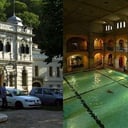
Steamy myths surface with “A legendás Gellért,” blending the hotel and bath’s Art Nouveau curves with real-life episodes from the city’s most photogenic wellness temple. Harder to access—and more tantalizing—is “Egy törökfürdő meséje,” an architectural walkthrough inside the closed Király Baths (Király fürdő), where Ottoman geometry meets centuries of damp stone. Some tours go after hours: “Mátyás-templom exkluzív épületbejárás zárás után” grants evening access to Matthias Church (Mátyás-templom), a chance to breathe in the mosaics and silence without the daytime crush.
Urban stories run on whispers. “Azt beszélik a városban…” dishes Budapest’s crime tales and gossip, hopping from scandal to scandal. “Városi kódfejtés” cracks palatial codes along Andrássy Avenue (Andrássy út), reading façades like ciphers of wealth and ambition. Green respite comes with “Titkos kertek és terek a belvárosban,” threading tiny gardens and tucked-away courtyards that most pass without noticing. These walks reset your city eyes, turning background into foreground in an afternoon.
Literary hearts beat in the Palace District (Palotanegyed) with “Irodalmi séta a poétika terei,” tracing a neighborhood where verses and salons shaped the culture. “Díva és csalogány” spotlights the power and pressure of female fame, while “Intim titkok a századfordulón” pulls you into women’s everyday lives at the turn of the century—fashioned modesty, coded freedoms, and clever subversions. The city’s medical and social history surfaces with “Volt egyszer egy Sárga Ház,” revisiting the story of the National Institute of Psychiatry and Neurology, a place of science, stigma, and reform.
On Angyalföld’s backstreets, “Zsinagógából vívóterem” follows the afterlife of a forgotten Jewish quarter where a synagogue morphed into a fencing hall—architecture reused as history’s palimpsest. Music lovers get “Randevú a hangszerek királynőjével,” a downtown organ tour capped with a mini concert, with guides turning pipes and pedals into characters. These are the kinds of programs that let you hear the city as much as see it.
“Volt egyszer egy Millennium” returns for evenings with historian Csaba Katona, who spins the age of grand boulevards and exhibition fever into crisp, witty storytelling. Many tours repeat across March—the Párisi Udvar, 17 Szabadság Square, and the W Budapest tracks—so you can pick your hour and pace your deep dives. For those who prefer steady variety, weekends stack multiple routes back-to-back, from sweets to stock exchange to secret gardens.
Dates cluster from March 5 through March 28, typically mornings on weekends and late afternoons or evenings midweek, across multiple city locations. Programs are offered in both Buda and Pest to show Budapest’s full face—from Ottoman domes and Habsburg steel to Deco glass and 21st-century polish. With 310 listings on the slate and more times loading, flexibility is baked in. Organizers reserve the right to change dates and programs, so check ahead, lace up, and let the city do the talking.