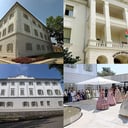
Discover 2026 at Budapest’s Hungarian National Gallery: rotating exhibitions, multilingual tours, family workshops, concerts, and talks across Buda Castle—where art, architecture, and history meet year-round.
when:


Budapest’s Hungarian National Gallery (Magyar Nemzeti Galéria) is rolling out a full year of culture in 2026, turning Buda Castle into a hive of exhibitions, tours, family workshops, and one-off happenings. Located at 1014 Budapest, Szent György tér 2, the gallery promises fresh programs all year, tapping into both Hungarian and global art. Expect rotating exhibitions, guided visits in multiple languages, museum education sessions for all ages, and special concerts and talks that make the historic setting feel electric.
The gallery sits in District I’s Várkerület on Szent György Square, right inside the Buda Castle complex. Online ticketing, phone, email, website, and social links are available through the gallery’s channels; some listings show placeholders, but visitors can request details via an information request form. Keep an eye on updates as programs are regularly refreshed to match interest and season.
March opens with hands-on creativity. Színezd újra! – a museum workshop for children – pops up on March 3, 5, 12, 19, and 25, giving kids repeated chances to dive into color and technique inside the galleries. On March 4, an online guided tour of the Tihanyi 140 exhibition celebrates Kálmán Tihanyi’s legacy, bringing his world to screens for remote audiences.
On March 7, two family-friendly staples share the stage: Mama, nézd! – A zöld árnyalatai (Mom, look! – The Shades of Green) side by side with Alkoss! – Századok divatjai (Create! – Fashions Through the Centuries), encouraging parents and kids to explore texture, shade, and the sweep of style. March 8 brings the Vasárnapi kóruskoncert (Sunday choral concert) that turns the gallery’s acoustics into an instrument of its own.
Mid-month, sculpture steps forward. A márvány csábítása – Aktszobrok a századfordulóról (The Seduction of Marble – Turn-of-the-Century Nude Sculptures) lands on March 10, offering a close look at fin-de-siècle form and the allure of stone. On March 11, toddlers get their turn with Tipegők – A Tavasztündér birodalma (Toddlers – The Realm of the Spring Fairy), a gentle introduction to art’s colors and shapes.
March 14 focuses on painterly light with Napfényes hétköznapok – Fényes Adolf művészete (Sunny Weekdays – The Art of Adolf Fényes), a companion to the major retrospective. On March 18, Nagyival a Galériában – Színekbe öltözött tavasz (With Grandma at the Gallery – Spring Dressed in Colors) invites generations to experience art together, followed by another Színezd újra! workshop on March 19.
International voices weave through the schedule. Mom, look! – The Shades of Green arrives in English on March 20, and an Italian-language guided tour, Visita guidata in italiano, leads visitors through highlights on March 22. That same day, Renoir, Monet, and the Impact of Impressionism anchors a talk and tour exploring how the movement rippled across Europe.
Water imagery flows on March 24 with Tengerek hullámai, folyók sodrása (Waves of Seas, Currents of Rivers), reading the drama of water in painting and sculpture. The little ones return on March 25 for Ovisok a Galériában – Virágok tánca (Kindergarteners at the Gallery – Dance of Flowers), alongside another Színezd újra! workshop and Szellemi fitnesz – Húsvétra hangolva (Mental Fitness – Tuning into Easter), a pre-holiday cultural warm-up. March 28 brings Mama, nézd! – A zöld árnyalatai back before the month wraps with Kaland a galériában – Rend és rumli (Adventure in the Gallery – Order and Mess) on April 9, a playful dive into composition and chaos.
April threads architecture through art. Explore the Gallery – From the Crypt to the Dome on April 18 uncovers the building’s bones, then Épületséta a Műemléki Világnap alkalmából (Architectural Walk for World Heritage Day) on April 23 celebrates the gallery’s place in urban history. Family poetry meets pictures in Mama, nézd! – Versek mentén (Mom, look! – Along Poems) on April 12 and April 25, mapping verse to visual cues for children and caregivers.
Running October 10, 2025, to March 15, 2026, A csend képei. Fényes Adolf (1867–1945) emlékkiállítás (Images of Silence: Adolf Fényes Memorial Exhibition) is a must-see. It reframes quiet domesticity and everyday radiance through a painter who found lyricism in the ordinary. March’s Napfényes hétköznapok program dovetails with this show, deepening context with guided readings of light, shadow, and stillness.
The calendar flags additional markers throughout the year, with entries in March beyond those detailed, plus programs slated for May 6, August 20, October 23, November 4, and a multi-day event November 27–29. From January 1 to December 31, the gallery also connects to the broader Buda Castle District (Budai Várnegyed) programs, threading joint events across the Castle District.
If you’re planning a culture-heavy city break, the area around Buda Castle brims with places to stay. At the foot of the castle, right by the Danube, a four-star boutique hotel offers panoramic rooms a 10-minute walk from the castle, Matthias Church, and Fisherman’s Bastion—all UNESCO World Heritage icons. The nearby Chain Bridge leads straight to Pest’s business quarter, shopping streets, cafés, and wine bars.
Buda Castle Hotel sits on a quiet side street of the Castle District, a World Heritage Site since 1987, surrounded by culinary spots and cultural stops. Budavár Panzió places you by Fisherman’s Bastion and steps from Matthias Church, inside the same historic grid. For value in the center, Gold Hotel Budapest lines rooms with air conditioning, LCD TVs, minibars, hairdryers, and free Wi‑Fi.
Hilton Budapest blends modern interiors with the remains of a 13th-century Dominican monastery, with the open-air Dominican Courtyard (Dominikánus Udvar) hosting concerts, receptions, and weddings. Rooms look out over the Danube, bridges, Margaret Island, Parliament, Pest’s skyline, and the Buda Hills. Closer to the castle gate, Hotel Castle Garden caters to both downtime and active days, right by Matthias Church, Fisherman’s Bastion, and Buda Castle Palace.
Pick a thematic thread—Impressionism, sculpture, architecture, or family workshops—and cluster events on the same day. Mix a building tour with a concert or kids’ workshop, then step outside for castle ramparts and river views. With a living calendar and programs in Hungarian, English, and Italian, the Hungarian National Gallery (Magyar Nemzeti Galéria) in 2026 makes Buda Castle as much a classroom as a canvas.