New year, new styles. Budapest’s Hungarian National Gallery (Magyar Nemzeti Galéria) starts 2026 by spotlighting artists who reinvented themselves and flipped their own visual language. Think János Vaszary, József Rippl-Rónai, Aurél Bernáth—creators who painted across styles so boldly you might not guess two works came from the same hand. After a guided wander through the galleries, a studio session invites participants to try one of Rippl-Rónai’s styles—hands-on inspiration, minus the preciousness.
Kids Become Detectives: Recolor It! Workshop
In January, the Recolor It! workshop turns the museum into a mystery trail for children. The halls are thick with clues, and the best young sleuths are needed. The mission: follow the tracks of Lajos Tihanyi and crack his secrets. Kids comb through dozens of his works, hunt for hidden details, then piece together the big picture. Along the way, they create: forging paintings as part of the investigative game, assembling a composite portrait, and experimenting with photo editing. Multiple dates in Budapest: January 21 and 28.
See Tihanyi From Home
On January 22, an online guided tour of the Tihanyi exhibition opens a window into his painting on the Day of Hungarian Culture—no coat, no commute, all insight.
Rebel Forms, Bold Colors: Lajos Tihanyi at 140
Marking 140 years since Lajos Tihanyi’s birth, the gallery stages a major retrospective of his paintings, graphics, and personal objects. Deaf from childhood, Tihanyi summoned color and form out of silence, crafting a singular visual voice without academic training. His radical language made him a defining member of The Eight (Nyolcak) and one of the most original figures in 20th-century Hungarian art. Guided tours run on January 23, 29, 31, February 7, and 8 in Budapest, with a sign-language-interpreted tour on January 25.
Family Adventures and Deep Dives
January 24 brings Adventure in the Gallery – Strange Faces (Kaland a Galériában – Különös arcok): two child-friendly tours tailored to ages 6–9 (10:30–11:15) and 10–13 (11:30–12:15). The same day, art historian Gergely Barki unpacks “Two or None: Doublings and Gaps in Tihanyi’s Oeuvre” (“Kettő vagy egy sem. Duplázások és hiátusok Tihanyi Lajos életművében”), tracing the repetitions and mysterious pauses in Tihanyi’s career.
Tiny Feet, Big Winter
On January 27, Toddlers – Snowflake Dance (Tipegők – Hópihe tánc) invites the littlest visitors to a winter wonder: white forests, colors hiding in snow, songs, stories, and a dance with drifting flakes. Warm gloves recommended—imagination required.
Mama, Look!
On January 29, Mama, Look! – Silence Speaks (Mama, nézd! – A csend beszél) explores how Tihanyi’s childhood illness and resulting deafness shaped his vision, turning a perceived limitation into an artistic edge. On February 5, Mama, Look! – The Beauty of the Body (Mama, nézd! – A test szépsége) looks at the nude—how depictions of the human form mirror shifting ideals—inside the refreshed Nude Sculptures from the Turn of the Century (Aktszobrok a századfordulóról).
Women of Words, Curators of Vision
On January 31, writer and art historian Rita Halász leads Embroidered in Concrete (Betonba hímezve), a subjective tour through the Tihanyi show, stitching personal insight into concrete context.
The Eight: A Short, Loud Revolution
February 1 spotlights The Eight (Nyolcak), the group that first showed as “The Seekers,” and, from 1909 to 1912, shook Hungarian culture with just three exhibitions—like a scientific and technological jolt, but on canvases. The guided tour connects directly to Tihanyi’s life’s work.
Charm and Restlessness
On February 5, art manager Nóra Winkler and art historian Tünde Topor guide The Restless Charmer, Lajos Tihanyi (Tihanyi Lajos, a nyughatatlan sármőr), tracing personality, portraits, and the charisma running through his experiments.
Budapest–Berlin–Paris: Path to Abstraction
On February 6, Rita Halász returns to map how café culture at the fin de siècle, Berlin’s avant-garde, and Parisian modernism pushed Tihanyi from figuration toward a pure language of color and form. The tour follows the zigzagging road to abstraction.
Create: Naked Reality
February 7’s Create! – Naked Reality (Alkoss! – Meztelen valóság) explores the body from the 19th century to today. After a gallery walk, participants turn their own bodies into both subject and tool, making prints and impressions—intimate studies, hands-on and ink-forward.
Adolf Fényes in Focus
Also on February 7, a tour delves into Images of Silence: Adolf Fényes (1867–1945) (A csend képei. Fényes Adolf) and related works from the permanent collection—quietness, light, and the painter’s delicately observed worlds.
From Crypt to Dome
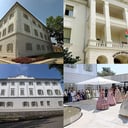
On February 8, the gallery’s building becomes the star. The Building Walk – From the Crypt to the Dome (Épületséta – Kriptától a kupoláig) reveals the former royal palace’s secrets: the Habsburg Palatinal Crypt, the panorama-rich dome, and other surprising corners—history you can climb.
Venice, But Make It Play
February 10 brings Toddlers – Venetian Carnival (Tipegők – Velencei Karnevál). Little travelers ride the carousel, dance, try on roles, and craft ornate masks—the essential carnival accessory—without leaving Budapest.
Italian in the Galleries
On February 13, Visita guidata in italiano picks a path through Hungary’s greatest hits, from the Middle Ages to today, with a special focus on the 19th and 20th centuries. Chances are you might even bump into Dante among the canvases—at least in spirit.
Valentine’s in the Halls
On February 14, Love Is in the Air drifts through muses, lovers, and artists’ wives. It’s romance by way of brushstroke—stories of inspiration, partnership, longing, and the faces behind the faces on the walls.
Budapest’s National Gallery is stacking the calendar with tactile workshops, kid-friendly adventures, deep scholarship, and tours in multiple languages. From the soundless intensity of Tihanyi’s color to the intimate textures of the human body and the grandeur of a palace that contains it all, the season opens every door—and then some.