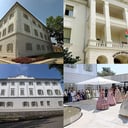
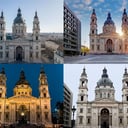
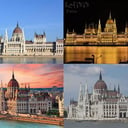
The Hungarian National Gallery is rolling into 2026 with a full slate of guided tours, curator talks, writer-led walkarounds, family workshops, and special-access programs across its permanent and temporary exhibitions. Set inside Buda Castle at Szent György Square (Szent György tér) 2, the museum remains Hungary’s largest public collection documenting the birth and evolution of Hungarian fine art. Tours run in Hungarian and English, with added Italian dates and accessible programs featuring sign-language interpretation. Photo usage is protected by the Museum of Fine Arts – Hungarian National Gallery copyright. For details and reservations, call the listed numbers on the gallery’s contact page.
January highlights: Tihanyi focus and writer-led tours
Kicking off on January 15, curator Mariann Gergely leads a special TIHANYI 140 tour in Budapest, anchoring a broader program devoted to painter Lajos Tihanyi (1885–1938). The next day, January 16, art historian Gergely Barki’s The Person Behind the Palette offers an insider’s view of artists’ lives and methods. On January 17, the gallery hosts two standout events: the subjective tour Concrete Embroidery led by writer Rita Halász, and the first date of the recurring Rebel Forms, Bold Colors – The Art of Lajos Tihanyi, which returns multiple times throughout January and February.
From sculpture to abstraction
On January 18, visitors can delve into Turn-of-the-Century Nude Sculptures, a focused look at figurative form at the fin de siècle. The museum’s Tihanyi programming continues with Rebel Forms, Bold Colors – The Art of Lajos Tihanyi repeating on January 18, 23, 29, and 31. January 22 brings an online tour of the Tihanyi exhibition, opening the show to remote audiences. On January 24, art historian Gergely Barki delivers the lecture Two or None: Doublings and Hiatuses in the Oeuvre of Lajos Tihanyi, exploring gaps, repetitions, and shifts in the painter’s career.
Workshops, families, access
The gallery builds a family-friendly rhythm across the month. Color It Anew! – Museum Workshop for Children appears on January 14, 21, and 28, while Mama, Look! – The Silence Speaks runs on January 15 and 29 for the littlest visitors and caregivers. January 21’s Mental Fitness – New Year, New Style invites audiences to shake up their aesthetic routines, and January 25 features Rebel Forms, Bold Colors – The Art of Lajos Tihanyi with sign-language interpretation, making the exhibition accessible to deaf and hard-of-hearing visitors. For early movers, Toddlers – Snowflake Dance on January 27 offers a playful, movement-based entry into the museum. January 24 also brings Adventure in the Gallery – Strange Faces, a discovery tour for young explorers.
Italian-language dates and more in January
International guests get their turn on January 16 with Visita guidata in italiano, an Italian-language guided visit. The month rounds off on January 31 with two events in tandem: another Rebel Forms, Bold Colors – The Art of Lajos Tihanyi tour and a second edition of Rita Halász’s Concrete Embroidery, which approaches the shows from a personal, literary lens.
February: charisma, journeys, and the Nyolcak
February opens on the 1st with The Eight (Nyolcak) – Scheduled Guided Tour, spotlighting the early 20th-century The Eight, Hungary’s pathfinding modernists. On February 5, Mama, Look! – The Beauty of the Body introduces children to the human figure, while Lajos Tihanyi, the Restless Charmer, led by Nóra Winkler and Tünde Topor, profiles the artist’s persona and magnetism. The next day, February 6, writer and art historian Rita Halász charts Budapest–Berlin–Paris: Lajos Tihanyi’s Path to Abstraction, tracing how the painter’s travels fed his move toward non-figuration.
Artists in focus, from Fényes to Tihanyi
February 7 features The Art of Adolf Fényes, a deep dive into the painter’s lyrical realism and social sensitivity. The same day, Create! – Naked Reality offers a hands-on workshop, followed by yet another chance to catch Rebel Forms, Bold Colors – The Art of Lajos Tihanyi. On February 8, the program expands vertically with Building Walk – From the Crypt to the Dome, a behind-the-scenes architectural tour of the museum’s dramatic setting, plus an additional Tihanyi date. For families, Toddlers – Venice Carnival arrives on February 10, bringing color and costume to the smallest visitors. February 13 hosts another Visita guidata in italiano, and Valentine’s Day brings Love Is in the Air on February 14.
Blockbuster exhibitions through winter
Running from November 6, 2025 to March 1, 2026, Endre Tót: Night Visit to the Museum brings the conceptual art legend into the gallery after hours. The flagship TIHANYI 140: Lajos Tihanyi (1885–1938) Oeuvre Exhibition spans November 21, 2025 to February 15, 2026, anchoring much of the January–February programming. Across the season, the gallery pairs traditional guided tours with writer-led perspectives, online access, and child-focused workshops, ensuring multiple points of entry for newcomers and seasoned visitors alike.
Where to stay near the National Gallery
With most tours in Budapest and the Hungarian National Gallery perched in the Buda Castle District, there’s no shortage of nearby stays. A four-star boutique hotel at the foot of Buda Castle, right on the Danube, offers panoramic rooms just a 10-minute walk from Buda Castle, Matthias Church, and Fisherman’s Bastion—UNESCO World Heritage favorites. The nearby Chain Bridge links directly to Pest’s business quarter, shopping streets, cafés, and wine bars. In the historic Castle District on the Buda side, Buda Castle Hotel sits on a quiet side street close to major sights, within the UNESCO-listed area since 1987. Budavár Pension (Budavár Panzió) puts guests at the foot of Fisherman’s Bastion, steps from Matthias Church, for a serene yet central base. For value in the center, Gold Hotel Budapest provides air-conditioned, elegant rooms with an LCD TV, minibar, hairdryer, and free Wi‑Fi. Hilton Budapest, integrated into remnants of a 13th-century Dominican cloister beside Fisherman’s Bastion and Matthias Church, blends contemporary interiors with medieval architecture. Its Dominican Courtyard hosts open-air events, while rooms look out to the Danube, bridges, Margaret Island, Parliament, the grand Pest skyline, and the Buda Hills.
Planning your visit
Tours take place in Hungarian and English, with select dates in Italian and events adapted with sign-language interpretation. Some programs are online. Check the gallery’s event pages for schedules, availability, and booking, and call the museum’s published numbers for assistance. The Hungarian National Gallery’s 2026 program leans into modernism, architecture, and playful education—whether you’re chasing Tihanyi’s abstraction, exploring turn-of-the-century sculpture, or introducing toddlers to art amid one of Europe’s most scenic urban panoramas.