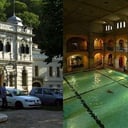
Gyula rolls out its streets like an open-air museum twice a week in 2026, inviting visitors on a guided, foot-friendly sweep through the city’s historic heart. The two-hour Downtown Wanderer tour takes in Gyula’s signature sights and stories with a local expert leading the way, promising a brisk but vivid primer on one of southeastern Hungary’s most charming towns. It’s all outdoor viewing, all easy strolling, and all about getting your bearings among towers, clocks, cafés, baths, and noble homes without stepping into ticket lines.
The meeting point is straightforward: gather in front of the Tourinform office at 5700 Gyula, Kossuth Lajos St. 7 (Kossuth Lajos u. 7). From there, the route follows a classic circuit—Tourinform office to Városház Street, Harruckern Square, the World Clock, Kossuth Square, the Kohán Gallery, the Ladics House, the Centenarian Confectionery, City Hall, St. Nicholas Church, the 1848–49 Honvéd Officer Memorial, the Castle, the Castle Spa, and finally the Almásy Manor. The guide, local historian Gábor Bánkuti, runs the tour on a steady schedule: Mondays 16:00–18:00 and Fridays 13:30–15:30. Group size is kept intimate, 2 to 15 people, which means questions are welcome and everyone can hear the good bits.
How to Join and What It Costs
A heads-up is required: sign up by 17:00 the day before, either in person at the Tourinform office (5700 Gyula, Kossuth Lajos St. 7) or by calling +36 66 561 681. Tickets cost 3,000 HUF per person—about 8.30 USD—and they’re sold exclusively at the Tourinform office. Tours are set for January 26 and January 30, 2026, with the schedule repeating weekly. The pace is relaxed, the tone is friendly, and the historical context is delivered right where it happened.
What You’ll See on the Stroll
The route draws a clean line through Gyula’s cityscape, starting with civic life on Városház Street and Harruckern Square, named for the 18th-century count who helped shape the town’s recovery after wartime upheaval. The World Clock is a photogenic pause—Gyula’s timepiece that doubles as a meeting hub—before Kossuth Square opens up with its statues, façades, and the steady hum of everyday life.
Art lovers get a taste of the Kohán Gallery (Kohán Képtár), dedicated to painter György Kohán, while everyday history buffs will gravitate to the Ladics House, a time-capsule townhouse of a 19th-century bourgeois family. The stop at the Centenarian Confectionery (Százéves Cukrászda) celebrates one of Hungary’s oldest sweet spots, a lovingly preserved café that has been doling out sugary nostalgia for generations.
St. Nicholas Church brings a spiritual skyline to the loop, while the 1848–49 Honvéd Officer Memorial honors the memory of the Hungarian Revolution. The Castle—the brick icon of Gyula—anchors the city’s medieval backbone, and just beyond it the Castle Spa (Várfürdő) signals the city’s laid-back wellness culture. The tour wraps at the Almásy Manor, where aristocratic grace lives in walls and windows—another slice of Gyula’s layered past. Throughout, sights are viewed from the outside, keeping the group moving and the narrative flowing.
Where to Stay: Steps From the Action
Gyula’s center is dense with places to drop your bags within a quick stroll of the Castle and Spa. Wellness Hotel Gyula pitches itself as a family-first base, promising full board in every package year-round, priced at half-board rates—a rare perk that includes holidays. The pitch is clear: romance for couples, fun for friends, playtime for kids, wellness for parents, and recharging for seniors, all under one roof.
Abbázia Apartment and Studio sits about 164 feet from the Castle and Spa, with the rowboat lake a one-minute walk away. Angelhaus Guesthouse keeps things quiet near the Spa, open year-round for travelers craving calm. If you’re traveling as a larger group, a central apartment house by the Élővíz Canal and just 328 feet from the summer bath entrance offers six separate, tastefully furnished apartments and 20 beds in total. The Castle and the pedestrian street are 10 minutes on foot.
Aqua Hotel Gyula Superior focuses on families heading to the baths, with superior rooms that split living and sleeping spaces—useful if you’re staying a few nights. Bányai Guesthouse caters to the “peace-and-quiet” crowd, leaning into Gyula’s softer side. Central Apartman holds a cluster of units in the city’s core; the biggest runs 110 square meters, which is 1,184 square feet, while the smallest studio is 18 square meters, or 194 square feet. It’s close to everything: the pedestrian street, World Clock, fountains, the Centenarian Confectionery, the birthplace of Ferenc Erkel (Erkel Ferenc), the Ladics House, Petőfi Square, churches, and the bus station, all within 820 to 1,640 feet; the train station sits 2,953 feet away.
Corso Boutique Hotel Gyula sits right in the city’s buzz—business and shopping at the doorstep, with the Castle, Spa, museums, shops, restaurants, confectioneries, and nightlife all a short walk. The back entrance opens straight onto the Gyula Promenade (gyulai korzó), dotted with flower-rich parks and gurgling fountains. Inside, an upscale wellness zone helps reset your mind and body, with a sauna world offering five different types.
Why Gyula Works for a Winter Walk
Short distances, big sights, and a route that tells a complete story make this tour a smart first step when you arrive. You’ll leave with a map in your head, a list of cafés to revisit, and a better grasp of who built what, when, and why. It’s casual, compact, and designed to fit a weekend rhythm—just remember to book your spot by 5 p.m. the day before and swing by Tourinform for your ticket. Mondays and Fridays are open. The streets are waiting.