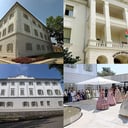
Fehérvárcsurgó, 2 Petőfi Street, becomes a year-round stage in 2026, with the Károlyi József Foundation hosting a rich program at the European Meeting Centre in the grand Károlyi Castle. Founded by the Károlyi family in 1994, the foundation preserves and rehabilitates one of Hungary’s great historic monuments while keeping it alive for the public with concerts, festivals, walks, exhibitions, and talks. Dates and programs may change, so keep an eye out.
March: Piano, Soprano, and a Botanical Wake-Up
March 10 brings pianist Balázs Fülei and soprano Mariana Pires to Fehérvárcsurgó. The same day, The Land of Imagination – in Images and Music pairs an exhibition by Sylvia Sass with the duo’s concert. On March 15, a botanical walk explores the castle park’s early spring life. March 20–21 hosts an international conference: European Integration and Religious Identities.
April: Easter Voices and Baroque Dialogues
April 11 offers the Hangellika Choir’s Easter concert in the chapel twice, plus the library program Up the Secret Staircase! April 18 features Sonates à deux – a German–French dialogue with Bach, Schaffrath, and Boismortier, in a harpsichord and Baroque instruments recital by Mónika Kecskés. A botanical walk returns April 19.
May–June: Literature, Gardens, and a Major Fair
May 9 revives Up the Secret Staircase!, and May 9–15 opens Writers of European Consciousness at the Visitor Center. A botanical walk follows May 17. June 5–7 stages the 22nd European Ornamental Plant and Garden Art Days – exhibition and fair, with another garden walk on June 21.
July–August: Film Scores and a Summer Academy
July 17 sets the island in the castle park as an open-air venue for the Voice & Brass Band film music concert. A botanical walk follows July 19. August 9–16 brings the ECHO Summer Music Academy and concerts, running alongside an August 16 garden tour.
September–October: String Quartets and Heritage
September 20 hosts a botanical walk, while September 25–27 marks Quartettissimo, the 17th European String Quartet Festival. October 3 returns to the library steps, and October 16–17 welcomes a heritage protection conference co-organized with the University of Pécs (Pécsi Tudományegyetem). October 17 doubles down with a choral and organ concert by Gabriella Semjénné Menus in the chapel, plus another garden stroll on October 18.
November–December: Craft, Candlelight, and Calm
November 7 climbs the secret stairs again, November 13–15 showcases Fresh Harvest, the 10th Contemporary Applied Arts Salon and Fair, and November 14 repeats the traditional St. Elizabeth’s Day candlelit concert. A botanical walk closes November 15. December 5 returns to the library, and December 20 wraps the year with a final winter garden walk.