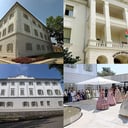
A grand aristocratic estate tucked away in Fejér County yet easy to reach, Károlyi Castle in Fehérvárcsurgó sets a high bar for culture in a 124-acre park of ancient trees. As a member of the European Network of Cultural Meeting Centres, the venue matches its stately charm with ambitious programming and large-scale outdoor events at 8052 Fehérvárcsurgó (Fehérvárcsurgó), 2 Petőfi Street (Petőfi utca 2).
February Highlights
February 14 brings Candlelit Castle Tours, followed by Pál Kálmán’s glass sculpture exhibition at the Visitor Center from February 14–28. On February 15, a Botanical Walk explores the castle park, while February 28 invites readers Up the Secret Staircase!, a playful library program.
Art, Music, and Ideas in March
March 10 spotlights The Land of Imagination: an exhibition by soprano legend Sylvia Sass, with a concert by pianist Balázs Fülei and soprano Mariana Pires. Another Botanical Walk returns March 15. On March 20–21, an international conference tackles The Judgment of Religion During the EU’s Construction and Enlargement.
Spring Programs
April 11 doubles up: a new Up the Secret Staircase! library session and an Easter concert with the Hangellika Choir in the chapel. On April 18, harpsichordist Mónika Kecskés leads Sonates à deux, a German–French dialogue featuring Bach, Schaffrath, and Boismortier on Baroque instruments. Botanical Walks continue April 19 and May 17. From May 9–15, The Writers of European Consciousness exhibition opens at the Visitor Center, preceded by the May 9 library program.
Summer in the Park
June 5–7 hosts the 22nd European Ornamental Plant and Garden Art Days with exhibitions and a fair, plus a June 21 Botanical Walk. On July 17, the Voice & Brass Band performs film scores outdoors on the castle park island, followed by a July 19 Botanical Walk. The ECHO Summer Music Academy and concerts run August 9–16, with a Botanical Walk on August 16.
Autumn to Winter
A September 20 Botanical Walk precedes Quartettissimo, the 17th European String Quartet Festival, September 25–27. The library series returns October 3. On October 16–17, a Heritage Conservation Conference is co-organized with the University of Pécs (Pécsi Tudományegyetem); October 17 features a choral and organ concert with Gabriella Semjénné Menus in the chapel, and October 18 adds another Botanical Walk.
Late-Year Traditions
Up the Secret Staircase! runs November 7 before Fresh Harvest, the 10th Contemporary Applied Arts Salon and Fair, November 13–15. A traditional St. Elizabeth’s Day candlelit concert glows on November 14, plus a November 15 Botanical Walk. The library program returns December 5, and a final Botanical Walk closes the year on December 20.
Organizers reserve the right to change dates and programs.