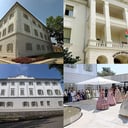
Budapest’s Hungarian National Gallery at 2 Szent György Square (Szent György tér 2) in the Buda Castle District rolls out a packed 2026 program for all ages, from preschoolers to seasoned art lovers. Expect rotating exhibitions, curator tours, creative workshops, family days, online guides, and cross-cultural events that spotlight both Hungarian and global art across centuries. The agenda keeps evolving, making the museum one of the city’s most reliable year-round escapes.
February 24 opens with Preschoolers in the Gallery – So Colorful!, a playful intro to how painters worked and what paintings and sculptures reveal. After a gallery game, kids create in the studio. The same spirit returns March 24 with Preschoolers in the Gallery – Dance of Flowers, where budding trees, fragrant blossoms, spring greens, and sunlit tones spark a cheerful, hope-filled exploration followed by a workshop.
From February 25 onward, the recurring Color It Anew! children’s workshop helps kids time-travel through images: life scenes, portraits, old photos. They’ll learn what people wore, used, played with, and dreamed of, then draw, paint, craft comics, and build stories. In March (4, 11, 18, 25), the series dives into folk life: village festivities, songs, food, dress, home decoration, and the mystery of tulip chests. Studio sessions translate folk motifs into original creations.
For the tiniest visitors, March 10 brings Toddlers – Realm of the Spring Fairy: singalongs, rhymes, and play exploring spring’s colors and scents in painting, then a hands-on workshop. On March 14, Grandparents in the Gallery – Spring Dressed in Colors invites generations to discover together, wandering through seasonal hues and aromas before a joint creative session uniting young and old.
Sculpture steps into the spotlight February 25 with Mental Fitness – Living Sculpture: a tour of the permanent galleries and the refreshed Turn-of-the-Century Nude Sculptures, blending nudes, love, and mythology, followed by studio work. On February 26, Mama, Look! – The Beauty of the Body focuses on how ideals of the human figure reflect their age through that same renewed nude-sculpture show. The theme returns March 8 in The Allure of Marble – Turn-of-the-Century Nude Sculptures, pondering how a frozen gesture becomes eternal and how antiquity makes stone feel alive.
On February 28, The Taste of Sunshine offers a curator-led tour by art historian Edit Plesznivy through the oeuvre of Adolf Fényes (Fényes Adolf), touching on family background, training, patrons, professional circles, and classical sources. March 12’s Sunny Weekdays – The Art of Adolf Fényes (Fényes Adolf) threads through intimate interiors and landscapes: how a peasant courtyard coexists in the shadow of French Impressionism, what links a colorful Szolnok interior to Paris, and what century-old genre scenes say about the everyday joys and sorrows of Hungarian peasants.
Art colonies get their due March 1 with Our Art Colonies – Szolnok and Adolf Fényes (Fényes Adolf), unpacking why these groups emerged, how they worked, and their influence on Hungarian art via the leading artists’ works. And on March 14, The Most Hungarian Habsburg: 250 Years Since the Birth of Palatine Joseph, art historian Gábor Bellák zooms in on behind-the-scenes histories, connections, and curiosities you’d miss in the gallery halls.
Green takes over March 5 in Mama, Look! – Shades of Green: from Eden in sacred art to sunlight in landscapes and the iconic green eosin glaze in Zsolnay ceramics, a cross-era hunt through painting and applied arts. An English-language version runs March 19 as Look at That, Mom! – Shades of Green. March 7’s Create! – Fashions of the Centuries is a stylish sprint through the collection’s most bizarre “style icons”: impossibly long shoe tips, horn-like headdresses, and extravagantly puffed backsides. The walk ends with a studio where you craft badges decorated with your favorite artworks.
March 22’s Waves of Seas, Currents of Rivers celebrates World Water Day by roaming the National Gallery’s loveliest landscapes, listening for waterfalls and raindrops while immersing yourself in Hungarian visual art. Also on March 22, Renoir, Monet, and the Impact of Impressionism (in English) unpacks what Impressionism is and how it transformed fine art, pairing major French names with their Hungarian contemporaries.
March 25’s Mental Fitness – Tuning Up for Easter explores how Christianity shaped medieval art and how Easter’s mystery remains a key theme. The tour traces sacred threads from Gothic altarpieces through Károly Ferenczy’s religious works to János Vaszary’s monumental Golgotha, ending with a shared studio session where participants create together.
On March 3, an online guided tour of the Tihanyi 140 exhibition lets you explore the painting of Lajos Tihanyi from home. For Italian speakers, March 20’s Visita guidata in italiano charts Hungarian art from the Middle Ages to today, focusing on the 19th and 20th centuries—and you might just spot Dante among the canvases.
All programs take place at the Hungarian National Gallery, 1014 Budapest, District I – Várkerület, 2 Szent György Square (Szent György tér 2), unless stated as online. With exhibitions, walks, workshops, lectures, and family days rolling from late February into March, the museum’s 2026 calendar is stacked with reasons to climb Castle Hill and step into a season of color, history, myth, fashion, faith, water, and spring.