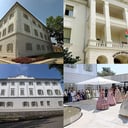
Keszthely throws open its doors April 16–18, 2026, for the Helikon Festival (Helikoni Ünnepségek), the biennial talent festival where generations, genres, styles, and eras meet onstage and in the streets. Organizers expect more than 2,000 high schoolers from 36 cities and around 90 schools to perform and compete across 20 arts categories, making it the largest arts review for Transdanubian secondary students. All programs and venues are free to attend, and much of the city becomes a stage.
Two Centuries of Tradition
Helikon’s roots stretch back over 200 years. Count György Festetics staged the first Helikon celebrations in 1817 with students from the local gymnasium and the Georgikon, joined by noted writers and poets of the era. The gatherings paused after Festetics’ death in 1819, saw revival attempts in the early 20th century, and finally returned for good in 1958 thanks to local patriots—reborn as a high school cultural competition that has shaped generations ever since. Today, Helikon stands for noble rivalry, respect for art and tradition, and cultured fun—memories shared by tens of thousands across Hungary.
How the Competition Works
Over two packed days—Thursday and Friday—audiences can catch more than 500 live performances and showcased artworks at six or seven venues around town. Students compete for Helikon ratings and bronze, silver, and gold certificates, with plenty of special prizes sprinkled in. Category headliners are unveiled at Saturday’s gala, where top winners also receive a custom bronze plaque by sculptor Ferenc Farkas, and the most successful school takes home a traveling trophy.
Expert juries—well-known actors, musicians, dancers, choral conductors, and literary figures—will do the judging. Among those accepting invitations for 2026: actors Anna Fehér and Ilona Bence, singer Kati Wolf, and poet Márton Simon.
Stages and Categories
Helikon’s 17 stage categories and additional literature, film, and visual arts entries pop up citywide:
– Poetry and prose recitation: Amazon House Visitor Center (Amazon Ház Látogatóközpont; Kastély u. 11.)
– Drama: Balaton Theater (Balaton Színház; Fő tér 3.)
– Classical music: György Festetics Music School (Festetics György Zenei AMI; Deák F. u. 3.)
– Choir: Balaton Museum (Balatoni Múzeum; Múzeum u. 2.)
– Folklore: GESZ Keszthely sports hall (Kísérlet u. 10/a; approach from Vásár tér, beside Egry J. Elementary)
– Pop vocals, movement arts, other: Csány–Szendrey Primary and Art School (Csány–Szendrey ÁI és AMI; Fodor u. 43.)
– Film and multimedia: György Fejér City Library (Fejér György Városi Könyvtár; Zeppelin tér 3.)
– Visual arts: Balaton Theater (Balaton Színház; Fő tér 3.)
– Literary submissions: Balaton Theater (Balaton Színház) and Amazon House Visitor Center (Amazon Ház Látogatóközpont)
Opening Highlights
Thursday starts with school registration at the Balaton Theater, a wreath-laying at Count Festetics’s statue in the castle park, a parade threading from Festetics Castle via Fő tér to Helikon Park, and an opening ceremony with the lighting of the Helikon flame. Keszthely’s mayor, Dr. Gergely Tóth, greets the crowd, and Prince György Festetics IV officially opens the event.
Beyond the Contest
There’s a rich lineup of talks, meet-and-greets, exhibitions, and workshops—plus nights filled with concerts, dance showcases, and a táncház. A standout is the Helikon Massed Choir, where every choir joins for a joint performance. Friday adds a torchlit procession with 3D architectural light mapping, accompanied by the PTE Brass Band.
Fő tér turns into a festival island: Helikon Vibe brings NGOs and makers; Tiéd a színpad! opens the mic to non-competition acts. Expect the Boombatucada drummers, singer-songwriter Kinka, pop-punk outfit My Last Summer, slam poetry by Benjámin Friss, PTE ETK Jazz Dance, the Puli band’s folk-world mashups, a Moldavian Csángó táncház with ReFolk, jam sessions with Keszthelyi Kultúrszövet, and a closing DJ set from DJ Koontz. Mehringer headlines Thursday night on the main stage.
Exhibitions, Films and City Games
Browse visual arts at the Balaton Theater during opening hours; settle into the literary reading corners at the Balaton Theater and Amazon House; catch film screenings of student video and multimedia at the city library; and keep an eye out for “Lose a Book!” (Veszíts el egy könyvet!) releases around town. At night, building projection mapping paints Fő tér. Climate-focused extras include the Climate Village – DIRECTED Project’s interactive tools on Fő tér, and a resilience workshop with youth art and climate-futures installations in the Balaton Theater’s Básti Room.
PTE Steps In Big
This year sees a cross-municipal partnership: the University of Pécs (Pécsi Tudományegyetem, PTE) signs on as a strategic supporter, contributing 10 million HUF (about 27,800 USD) and packing the schedule with performances, attractions, and leisure activities. The tie-up gives Helikon a strong professional partner and lets PTE connect directly with talented teens, schools, and teachers. On Fő tér, PTE Sziget runs 2–8 p.m. Thursday and Friday: meet students and staff for admissions Q&A, spin a prize wheel, print a custom tote, and win swag. Chip & Chase, a citywide puzzle hunt across 10 Helikon sites, offers PTE gift bundles for players who clear at least five stations.
Saturday: Decisions and the Gala
Saturday morning brings evaluations and awards across choir, folklore, drama, classical, recitation, and pop/movement/other categories at their respective venues, followed by a classical gala concert at the György Festetics Music School. At 3 p.m., the Helikon Grand Prize Gala in the Csány–Szendrey sports hall crowns the category champions, hands over the traveling cup to the most successful school, and showcases the standout performances.
Citywide Effort, Lasting Memories
Helikon is fully nonprofit and free to attend. Nearly 200 volunteers and more than 15 local institutions power the logistics, guided by the Helikon Organizing Committee. The influx of students and chaperones generates roughly 4,000 guest nights and over 6,000 meals in three days in Keszthely and neighboring towns. Many notable Hungarian artists—from Tibor Bödőcs to Vera Tóth, and earlier György Vukán and Sándor Oszter—counted Helikon among their first stages. In the self-styled capital of Lake Balaton, this citywide collaboration delivers lifelong memories to thousands every other spring.