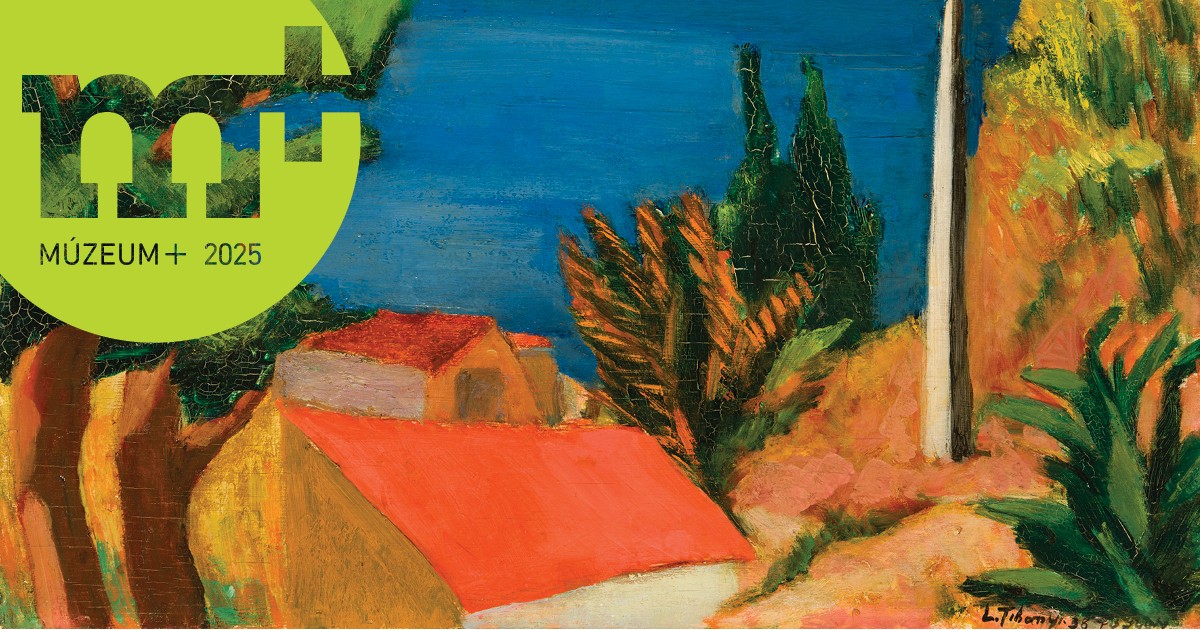
Budapest’s Hungarian National Gallery keeps the lights on late again with Múzeum+, the hit after-hours series returning on Wednesday, December 3, 2025, from 6 pm to 10 pm at 2 Szent György Square (Szent György tér 2). This edition zeroes in on Lajos Tihanyi—trailblazer, confidant, and legend of The Eight (Nyolcak)—with a packed slate of talks, tours, live music, and hands-on workshops, all while the Pócz Winery from Balatonlelle pours.
Tihanyi 140: A Radical Life, Reframed
Born 140 years ago, Lajos Tihanyi was a defining figure of the Hungarian avant-garde. For decades, Hungarians mostly knew his works from black-and-white reproductions; his archive took a winding route home. Múzeum+ Tihanyi digs into the man and the myth: the openhearted friend, the revolutionary painter who moved from figurative intensity to a language of pure color and form.
At 6 pm, writer and art historian Rita Halász leads Budapest–Berlin–Paris. Tihanyi’s path to abstraction threads through café culture at the turn of the century, Berlin’s avant-garde, and Parisian modernism, tracing how he broke from figuration into autonomous shapes and colors.
At 7 pm, photographer Zoltán Tombor and art historian Gábor Bellák guide An Avant-Garde Painter Through a Photographer’s Lens. They parse Tihanyi’s POV—framing, distortion, composition—and how it resonates with early 20th-century photography. They revisit how contemporaries like André Kertész and Brassaï saw him and how a contemporary photographer sees him now.
At 8:30 pm, art manager Nóra Winkler and art historian Tünde Topor present “Phenomenon: That Was Lajos Tihanyi.” The Eight’s founding member painted a whole gallery of Hungary’s early 20th-century literary and artistic stars, bringing psychological portraiture into Hungarian painting. He painted himself often; his late abstractions are no less compelling. Expect insights into both portraiture and the abstract masterpieces of his final period.
“No Literature Without the Café”
At 7:30 pm, literary curator Anna Juhász and actor Dénes Száraz step into the café age. Fin-de-siècle cafés were buzzing hubs of public life: the price of a daily coffee was a ticket to the cultural core. Tihanyi’s father, József Tihanyi, ran the Balaton Café at Rákóczi Road (Rákóczi út) and Szentkirályi Street (Szentkirályi utca)—one of the era’s most exclusive salons, frequented by Endre Ady (Ady Endre), Ferenc Molnár, Géza Csáth, Frigyes Karinthy, Dezső Kosztolányi, Ernő Szép, Jenő Tersánszky (Józsi Jenő Tersánszky), and Ferenc Herczeg. In that atmosphere, Tihanyi’s idea to paint portraits of the scene’s key figures took root.
Roundtable: The Secret of Tihanyi’s Art
At 7 pm in the 19th-century permanent collection’s Salon Wall, a roundtable titled “Truly, His Spirituality Was a Marvel…” brings together curator Mariann Gergely and art historians Gergely Barki, Merse Pál Szeredi, and Tünde Topor, moderated by art manager Nóra Winkler. They revisit Tihanyi’s contradictions: an autodidact in Nagybánya (Baia Mare), a cubist in Paris, deaf-mute and still a charmer, hanging onto chair backs at concerts to feel the music. He created some of Hungary’s boldest portraits before joining Abstraction-Création in Paris, working until his early death in 1938.
Tuning to Images: Music Meets Painting
At 8 pm in the same Salon Wall space, The Colors of Silence, the Melodies of Color Blends is a talk and live music program with art historian Krisztina Mácsay and composer-conductor Ádám Balázs Czinege, featuring artists of the Anima Musicae Chamber Orchestra. The Eight only showed together three times, but their impact endures. Their 1909 show New Pictures nodded to Ady’s New Poems, and the highlight of their second exhibition was a concert of Bartók, Kodály, and Weiner performed by Bartók himself and the Waldbauer–Kerpely Quartet. Many of The Eight were skilled musicians; even Tihanyi, who lost his hearing to childhood meningitis, was a regular concertgoer. Rhythm, harmony, form, and color tied their visual and musical worlds—this program projects those parallels.
Beyond Tihanyi: Guided Tours Across the Collection
At 6 pm and 7 pm, The Way of Light follows Mihály Munkácsy and Adolf Fényes with art historian Réka Krasznai in Variations on Realism – From Munkácsy to Mednyánszky, mapping the intangible drama of light in late 19th-century streetscapes, rural scenes, and lush interiors.
At 6:30 pm, The Images of Silence: The Multifaceted Adolf Fényes with art historian Mária Váczi explores tranquil everyday life and mysterious fantasy in Fényes’s memorial show.
At 6:15 pm and 7:15 pm, educator Bettina Bali leads The Eight in the Modern Times galleries. At 6:30 pm and 9 pm, art historian Brigitta Molnár covers 19th-century portraits and glances. At 7:30 pm and 8:30 pm, Mária Váczi highlights Courbet, Monet, and Gauguin in the post-1800 International Collection. At 8 pm, visual artist Alexandra Hegedűs traces The Cradle of Modern Hungarian Art – The Nagybánya (Baia Mare) artists’ colony.
Make It: Avant-Garde Christmas Ornaments
From 7 pm to 9 pm, get hands-on at the Csontváry Lounge crafting avant-garde Christmas decorations with educator Evelin Petrőcz.
English Tours
At 7 pm, Highlights of Hungarian Art with visual artist Alexandra Hegedűs meets at the entrance to Late Gothic Winged Altarpieces. At 8:30 pm, The Eight with museum educator Bettina Bali meets at Modern Times.
Live Jazz All Night
The Soso Lakatos Quartet sets the tone: alto saxophonist Sándor “Soso” Lakatos has been onstage since age 12, studied in Amsterdam with top American masters, and plays with Hungary’s best. Pianist Árpád Tzumo Oláh, a standout of his generation, won the Gramofon Award in 2004 for his album My Time. Bassist Péter Oláh started classically, recorded his first album at 18, and has played across many countries. Drummer András Pecek Lakatos anchors the group with the fire of one of his generation’s strongest talents.
All programs meet at clearly marked points; thematic tours run 25 to 60 minutes. Music flows all evening, wine is poured, and Tihanyi’s world opens up—abstract, intimate, and very much alive.