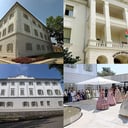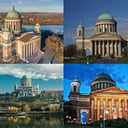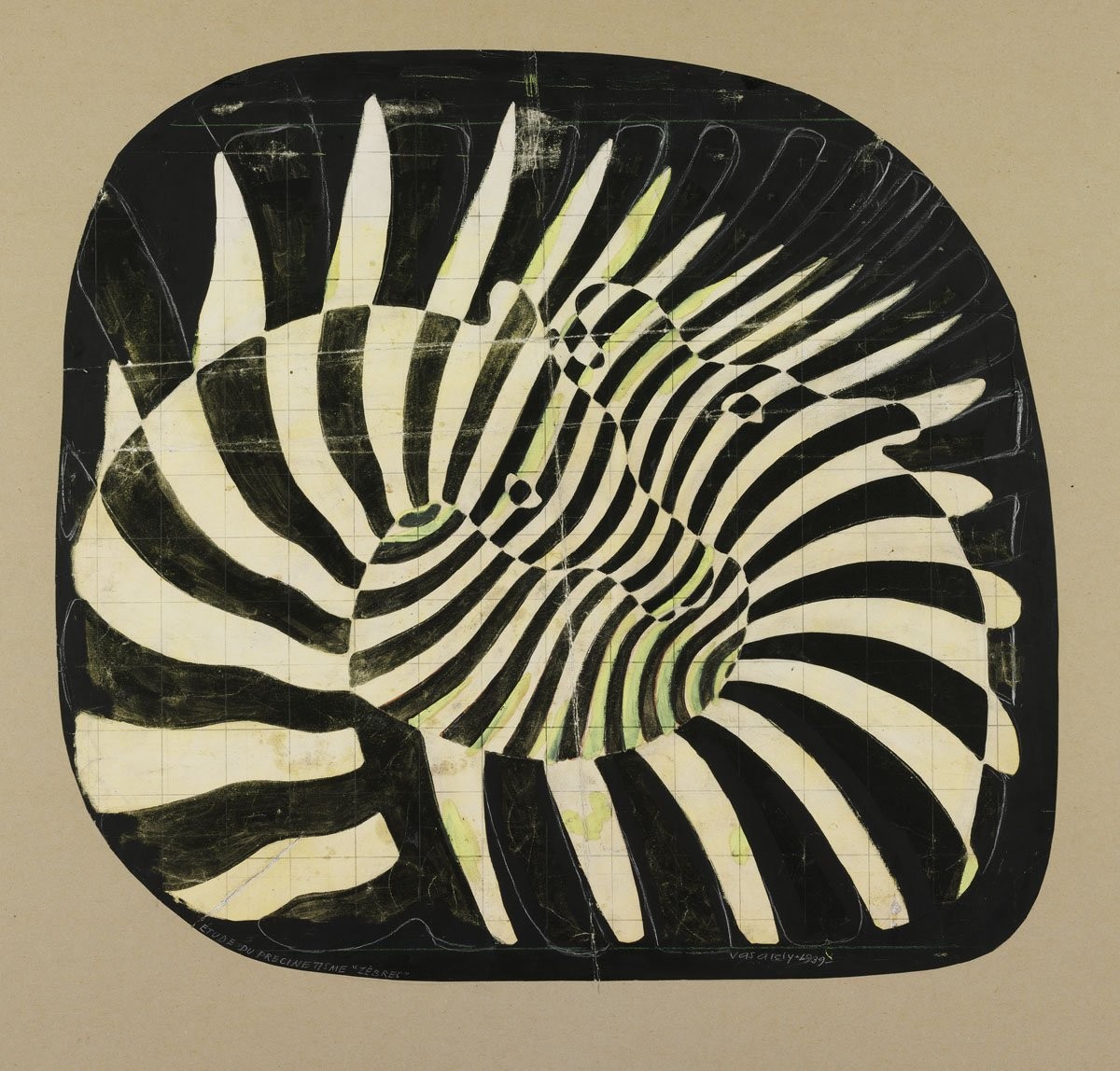
The Vasarely Museum in Budapest spotlights the life and work of Hungarian-born Op Art legend Victor Vasarely. In the early 1980s, Vasarely donated his handpicked collection to the Hungarian state. To permanently showcase it, one wing of the Baroque Zichy Palace in Óbuda was transformed into a dedicated space. Open since 1987, the museum now holds one of Central and Eastern Europe’s richest Vasarely collections, offering a sweeping view of more than 400 unique and editioned works, from early advertising graphics made in Hungary to his 1960s–70s Op Art and plastic pieces.
Free Entry on the Day of Hungarian Culture
January 22, 2026
Budapest opens its doors: visit on the Day of Hungarian Culture and see both exhibitions for free. It’s a rare chance to take in Vasarely’s optical experiments alongside a major survey of European graphic art spanning decades.
European Graphics: From Constructive to Conceptual
OSAS Hall — November 12, 2025 – March 22, 2026
First shown at the Kammerhof Museum in Gmunden as part of Salzkammergut 2024 – European Capital of Culture, European Graphics traces the international dialogue around Constructive, Concrete, and Conceptual art. For decades, Gmunden stood out through the Concrete Art Symposia (from the 1989 pilot on Constructive tendencies through 2009), shaping debates and collaborations.
Vienna’s Galerie Lindner, founded in 1985 and operating on Schmalzhofgasse from 1993 until its closure in 2020, played a pivotal role in Austria, working closely with the Gmunden symposia. Its steadfast commitment to Constructive, Concrete, and Conceptual art yielded numerous graphic portfolios and a multiples series—many featured here. Most participating artists exhibited at the Gmunden symposia and other international shows, making this survey a vivid map of several decades of evolution in these movements.
2026.01.22.
Budapest
2025.11.12. – 2026.03.22.
Budapest
Organizers reserve the right to change dates and programs.