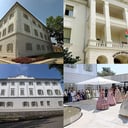
The Hungarian National Gallery is the country’s largest public collection documenting and showcasing the birth and evolution of Hungarian fine art. Beyond blockbuster permanent and temporary exhibitions, the museum fills its calendar with multilingual guided tours, themed programs, family days, festivals, and concerts. Kids get their own creative workshops, art education sessions, and summer camps—all inside the former royal palace with its sweeping city views.
Digital deep dives and kid-powered creativity
Start from your sofa: on February 3, an online guided tour opens the Tihanyi exhibition to anyone curious about the painter’s color-driven world and restless spirit. Then, across multiple dates—February 4, 11, and 18—the hands-on children’s workshop Color It Anew! reimagines the past for young visitors. Through paintings, genre scenes, portraits, and vintage photographs, kids explore everyday life in earlier eras: what people used, how they dressed, what they played, and what they dreamed. Inspired by the artworks, they draw, paint, build comics, and spin their own stories—all in Budapest.
The irresistible pull of Lajos Tihanyi
The Gallery celebrates the 140th anniversary of Lajos Tihanyi with a sweeping career exhibition. He lost his hearing in childhood, forged a visual language from silence, and, without formal academic training, became a defining member of the Nyolcak (The Eight) and one of the most original voices in 20th-century Hungarian painting. His key canvases, graphic works, and personal objects take center stage, supported by a full slate of tours and talks.
On February 5, Lajos Tihanyi, the restless charmer gets a joint guided tour by art manager Nóra Winkler and art historian Tünde Topor. The same day, Mama, Look! – The Beauty of the Body visits the renewed turn-of-the-century Nude Sculptures display, framing each era’s ideals through the human figure.
On February 6, writer and art historian Rita Halász leads Budapest–Berlin–Paris: Lajos Tihanyi’s Path to Abstraction, tracing how café culture, the Berlin avant-garde, and Parisian modernism shaped his journey from figuration to a pure language of color and form. Further Tihanyi-focused guided tours run February 7, 8, 11, 12, and 13—including English- and French-language sessions: Rebellious Forms, Bold Colors – The Art of Lajos Tihanyi (English, Feb 13) and Budapest–Berlin–Paris. L’art de Lajos Tihanyi (French, Feb 8). An Italian tour on February 13 scans Hungarian art’s greatest hits from the Middle Ages to today, with a special focus on the 19th and 20th centuries—Dante may even make a cameo among the canvases.
Rediscovering Adolf Fényes (Fényes Adolf)
The reverent and intimate A Silence of Images: Adolf Fényes (1867–1945) memorial exhibition receives guided tours on February 7 and 21, and a curator-led walkthrough with Ágnes Horváth on February 15. For remote visitors, an online tour on February 10 brings Fényes’s restrained realism and light-filled interiors to living rooms. The tours weave in related works from the permanent collection to frame his legacy in context.
From crypt to cupola
On February 8, the architectural walk From the Crypt to the Cupola opens the building like a storybook. In one sweep, visitors learn the museum’s history and treasures, descend into the Habsburg Palatine Crypt, climb to the panorama-laced dome, and step into lesser-seen corners of the palace. It’s one of the most atmospheric ways to experience Budapest and the Gallery in one go.
Carnival, toddlers, and hands-on art
February 10 brings Tipegők (Toddlers) – Venetian Carnival for the tiniest art lovers, whisking them to a city of masked balls and parades. Expect carousel rides, dancing, role-play, and—naturally—crafting a lavish carnival mask to take home. On February 21, Adventure in the Gallery – Carnival Transformation splits family tours by age: 10:30–11:15 for 6–9-year-olds and 11:30–12:15 for 10–13-year-olds.
For adults, February 7’s Create! – Naked Reality bridges the body’s role in art from the 19th century to today, then flips the script with body-print creations using participants’ own forms as both subject and tool. On February 22, Nude Sculptures from the Turn of the Century gets a guided tour showing how depictions of the nude shift with changing ideals.
Love stories and music for Valentine’s Day
February 14 blooms across languages and moods. A guided tour of the most beautiful Hungarian love paintings follows artists and muses through passionate, stormy, and tragic romances—including works by Pál Szinyei Merse, János Vaszary, and Róbert Berény. Love Is in the Air offers a playful English-language ramble through the Gallery’s greatest love stories in painting and sculpture—muses, lovers, and artists’ wives included. Meanwhile, a musical tour with Ádám Bősze and Gábor Bellák pulses through Budapest, Berlin, Paris, and the electric first decade of the 20th century, set against Tihanyi’s canvases.
Talks, bodies, and myth
On February 14, art historian Gergely Barki delivers a bonus talk: Two or None: Doublings and Hiatuses in the Oeuvre of Lajos Tihanyi, digging into missing links, repetitions, and the fascinating gaps that define a restless career. On February 19, Look at That, Mom! – The Beauty of the Human Body returns in English to the refreshed nude sculpture show, again connecting ideals of beauty with their times.
Rounding out the month, February 24’s Preschoolers in the Gallery – How Colorful! lets little explorers learn how painters worked and what artworks reveal. After playful gallery games, the workshop opens for creative making. On February 25, the museum’s Mind Fitness – Sculpture Come to Life asks if a statue can awaken—and if one can fall for a flawlessly carved form. February’s edition blends nude sculpture, love, and mythology into a singular, spirited mix.
Budapest’s Hungarian National Gallery packs February with tours, workshops, talks, and cross-border perspectives—on-site, online, and in multiple languages—inviting every age to meet art where it lives and where it keeps reinventing itself.