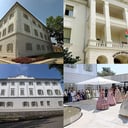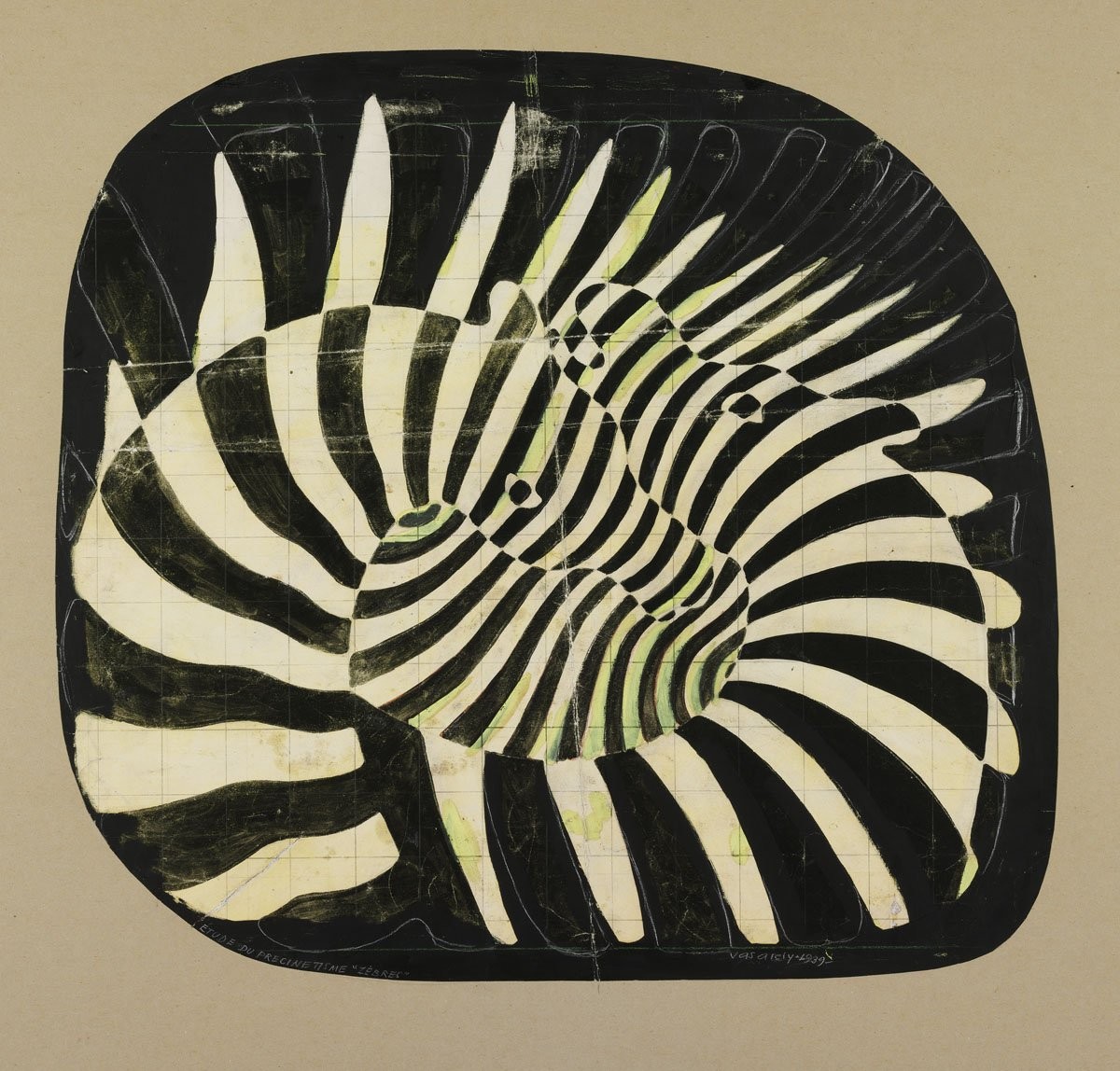
A museum in Budapest celebrates the life and work of Hungarian-born Op Art pioneer Victor Vasarely. He donated his personally curated collection to the Hungarian state in the early 1980s, and one wing of the Baroque Zichy Palace (Zichy-palota) in Óbuda was transformed to display it permanently. Opened to the public in 1987, the Vasarely Museum, part of the Museum of Fine Arts, now holds one of East-Central Europe’s richest Vasarely collections. With more than 400 works—both unique pieces and editions—the collection traces his career from early advertising graphics made in Hungary to the optical and sculptural works of the 1960s and 1970s.
Saturday Sampler
January 10, 2026
Interactive, family-friendly, thought-provoking sessions run every second Saturday of the month.
Next up:
Movement Mania: “Dizzying Star Wars Walk”
Saturday, January 10, 2026, 10:30–12:00
First it twists left, then right: does this Vasarely painting remind you of stairs, a tunnel, or a pyramid? Or more like a dizzy Star Wars stroll? Discover how straight lines can build curves, harness the power of the color scale, and see how easily optical illusions spring to life with a special puzzle designed to match the painting in the gallery. Then rotate pre-cut squares and create a captivating piece to take home.
Age group: kids 6–12 with adult companions.
Saturday Samplers run on the second Saturday of each month, when visitors under 26, plus one or two accompanying adults who are close relatives of visitors under 18, can enter the museum free of charge.
Please purchase a program ticket for Saturday Sampler.
Program fee: $4.19 per child.
European Graphics
OSAS Room — November 12, 2025–March 22, 2026
European Graphics first debuted at the Kammerhof Museum (Kammerhof-Museum) in Gmunden as part of Salzkammergut 2024 – European Capital of Culture. Through the Gmunden Symposia of Concrete Art (1989 – Constructive Trends pilot project – 2009), the city became a standout venue for international dialogue around constructive, concrete, and conceptual art.
Vienna’s Galerie Lindner played a key role in Austria’s scene, working closely with the Gmunden symposia. Founded in 1985, the gallery moved in 1993 to Schmalzhofgasse in Vienna, where it operated until 2020, consistently championing constructive, concrete, and conceptual art.
Over the years, Galerie Lindner published numerous print portfolios and a multiples series, shown here alongside other works. Most artists in the exhibition took part in the Gmunden symposia and other international shows. European Graphics offers a wide-angle view of decades of evolution in constructive, concrete, and conceptual art.